



Staff Writer on Voyager
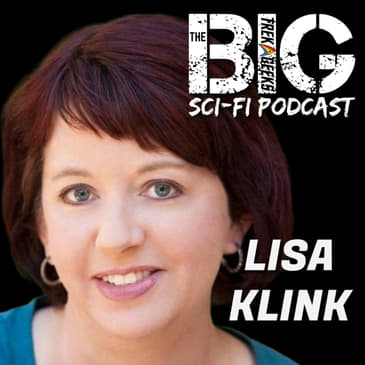
The wonderful Lisa Klink joins us to discuss her time writing for Star Trek Voyager! She shares how she got into writing and got on to Voyager's writing staff. We talk more about Voyager on this episode than we have any other before! So hold on tight Voyager fans...you're going to love this week's fun episode! We loved talking to Lisa and you will love the behind-the-scenes info she shares!
This podcast is a proud part of the Trek Geeks Podcast Network and works hard to bring you great content from all over the science fiction universe. We would love to hear your feedback, suggestions, and ideas. Take a moment to send us an email at thebigscifipodcast@gmail.com
Music heard on this podcast opening is from Mikhail Smusev of SignmaMusicArt and provided by Pixabay. Listen to more of his music at: https://pixabay.com/users/sigmamusicart-36860929/
Music heard at the end of this podcast is from Ivan Ohanezov of PumpUpTheMind and provided by Pixabay. Listen to more of his music at: https://pixabay.com/users/pumpupthemind-19969411/
Check our podcast out and learn more about the other great podcasts on the network by visiting trekgeeks.com.
We've got the merch! If you want BIG Sci-Fi swag, check out this link and support us by wearing us everywhere you go! www.teepublic.com/thebigscifipodcast
Check out all of our social links in one place:
https://linktr.ee/thebigscifipodcast
Check out Cris' amazing YouTube channel for Trek content galore:
https://www.youtube.com/@yellingaboutstartrek1532
Check out Brian's new book available at Amazon for Kindle and in paperback:
https://www.amazon.com/stores/Brian-Donahue/author/B0C3BQ93VD
Subscribe for free to Brian's Substack page where he writes original science fiction and fantasy: https://bdonahue.substack.com/
Find Adeena's books here: https://crazyrobot.myshopify.com/
Follow her on Substack here: https://beyondthedroid.substack.com
[00:00:00] This is the Big Sci-Fi Podcast, the biggest sci-fi podcast in the galaxy, a proud part of the Trek Geeks Podcast Network.
[00:00:08] Season 6 was a blast, but Season 7 is going to be even more fun as we continue to go where no podcast has gone before, deep into the sci-fi universe.
[00:00:19] Join Idina, Brian, Chris, and Steve as they explore television, film, and literature for the best sci-fi has to offer.
[00:00:26] Even if you're not a sci-fi fan, you'll love the banter and the epic tangents as these four friends talk about what they love.
[00:00:34] We invite you to sit back and relax because the journey is just beginning on this season of The BIG Sci-Fi Podcast.
[00:00:44] Welcome to The BIG Sci-Fi Podcast, the biggest sci-fi podcast in the galaxy.
[00:00:48] I'm Brian from Ohio, and I'm here with my fantastic co-host, Idina.
[00:00:53] Hello.
[00:00:54] Hello, Idina. Chris.
[00:00:56] Hey.
[00:00:57] Hey.
[00:00:57] How are you doing, buddy?
[00:00:58] I'm doing well.
[00:01:00] When someone says hey to me, I always have to mimic it.
[00:01:04] Hey.
[00:01:05] How's it going?
[00:01:05] Steve, how are you doing, brother?
[00:01:07] Guten tag.
[00:01:08] Oh, boy.
[00:01:10] Hold on, everybody.
[00:01:11] German for a good day.
[00:01:12] Okay.
[00:01:13] It's going to be quite the podcast tonight.
[00:01:15] We love talking all things science fiction, but especially when that science fiction means we get to talk a little bit about Star Trek.
[00:01:23] And today we have the pleasure of having on our show Lisa Klink, a staff writer on Star Trek Voyager.
[00:01:31] She's also worked on several other shows, including Star Trek D Space Nine, my personal favorite.
[00:01:36] You might recollect.
[00:01:37] Roswell, Pandora, and other shows.
[00:01:39] Lisa has written or co-written four novels, as well as short stories, graphic novels, and screenplays.
[00:01:45] Maybe even more than that.
[00:01:46] And ladies and gentlemen, aliens of all kinds, please welcome the one and only Lisa Klink.
[00:01:52] How are you doing, Lisa?
[00:01:54] I'm doing great.
[00:01:54] Thank you.
[00:01:55] Really glad to have you on our podcast.
[00:01:57] We're excited that you're here with us.
[00:02:00] And we're really excited to talk about your time on Trek, your other work, other fandoms you might have.
[00:02:06] All that being said, we just love getting to know our guests and let fans have the opportunity to learn more about you, even beyond your work.
[00:02:16] And so if it's all right with my co-hosts, I'll kick off the conversation tonight by asking how you got into writing in the first place.
[00:02:25] So inquiring minds want to know, and there's a couple of writers.
[00:02:29] We've all dabbled in that.
[00:02:31] So we love hearing origin stories and to be inspired for that.
[00:02:34] So what inspired you or helped draw you into this field?
[00:02:39] Well, it's funny because I was always into movies and always into sci-fi.
[00:02:42] You know, ever since Star Wars, I kind of got me addicted.
[00:02:46] And when I went to college, I kind of thought that I wanted to direct movies.
[00:02:51] That was really sort of what impelled me to drive out to Los Angeles after college.
[00:02:55] You know, I wanted to be the next James Cameron.
[00:02:57] I wanted to direct those big, you know, like sci-fi action movies.
[00:03:01] So I came out here and ended up working for Catherine Bigelow, actually.
[00:03:06] I was reading scripts for her as her development assistant.
[00:03:09] And she was filming Strange Days at the time.
[00:03:12] And I got to go down on the set and visit her.
[00:03:14] And I realized I do not want to be a director.
[00:03:19] And but during the course of reading all these scripts for her, I kind of got a sense of what they were and what made them good and what made them bad.
[00:03:28] And I thought, well, this is something that I could do.
[00:03:30] I was an English major in college and I'd written some plays.
[00:03:33] So I thought, well, maybe I could write scripts.
[00:03:36] And then I went to a Star Trek convention and found out that they would read spec scripts, that pretty much all you had to do was write it and send it in and somebody would read it.
[00:03:46] And I thought, well, I could do that.
[00:03:47] I love Next Generation.
[00:03:49] So I wrote a Next Generation spec and sent it in.
[00:03:52] And fortunately, I did not know that they got something like 6,000 scripts a year.
[00:03:57] Oh, my goodness.
[00:03:57] Yeah.
[00:03:58] Yikes.
[00:03:59] But some poor intern read all of them.
[00:04:01] So I got plucked out of the pile and invited in a pitch and ultimately sold a story to Deep Space Nine.
[00:04:09] Wow, that's fantastic.
[00:04:11] That's great.
[00:04:12] So let me ask you this.
[00:04:14] I'm really curious.
[00:04:15] I just went to the Palace Theater here in Cleveland, Ohio, to see a touring production of Les Mis.
[00:04:24] I love the stage.
[00:04:25] I love musicals in particular.
[00:04:27] So since you've written a couple plays, in your experience, what are some key differences between writing for the stage and writing for television or even film, for that matter?
[00:04:41] Well, it's funny because Rick Berman, who sort of oversaw all of Star Trek while I was there, always used to say we call them motion pictures for a reason.
[00:04:51] And I mean, he mostly said that, you know, to directors to kind of keep the camera moving.
[00:04:55] But I think that's something good to keep in mind as a writer as well, in that, you know, plays are a lot of standing and talking, you know, and that is kind of death to a TV series or for a movie, just have two people standing there.
[00:05:08] I mean, there's some scenes in which they can get really emotionally heated and all that, but still, ideally, you want to tell the story visually.
[00:05:16] And so that's really what kind of was different for me in television was, you know, obviously, I love writing dialogue and I like doing character.
[00:05:25] But to kind of make that something that if you turned off the sound, you would still know what was going on.
[00:05:33] Yeah, that was kind of my goal.
[00:05:36] And, you know, that's that's fun.
[00:05:38] And that's totally different from playwriting.
[00:05:40] Yeah.
[00:05:41] Wow.
[00:05:42] You're interested.
[00:05:43] So, so, so I think the next question then, based off of what you have mentioned already and guys feel free to jump in, of course, but since I jumped in first, I'm going to ask the next question.
[00:05:53] Of course, you are the host.
[00:05:56] So you said that you, you went in and you were courageously pitched to next gen and six.
[00:06:04] I mean, that's just what are the odds?
[00:06:06] So there was something in what you wrote that, that they picked you out and said, let's go a little deeper here.
[00:06:13] And then it ended up being a D space nine story.
[00:06:15] What's what story was that?
[00:06:17] It was the one that became the episode Hippocratic Oath.
[00:06:20] Ooh.
[00:06:21] Oh, right.
[00:06:23] Yeah.
[00:06:23] Yeah.
[00:06:23] Yeah.
[00:06:24] That was my first, my first professional writing job.
[00:06:27] Wow.
[00:06:27] That's amazing.
[00:06:29] I was very lucky.
[00:06:30] I remember watching that episode too.
[00:06:32] And when it, when it aired originally, cause Lisa, I'm proud to say I'm an original D space niner.
[00:06:38] I watched it from start to finish.
[00:06:41] Yeah.
[00:06:42] Except for the very last season, I was engaged to be married.
[00:06:45] And that was a sign that my parents knew I was in love.
[00:06:49] I was missing deep space nine on Saturday nights to be with my fiance.
[00:06:53] Excuses.
[00:06:54] I caught up eventually though.
[00:06:55] So, but I remember when Hippocratic Oath came out and just that, that's a really riveting episode.
[00:07:02] That's quite the entry episode into DS nine.
[00:07:05] I was really happy with how it came out.
[00:07:08] And, and I was lucky cause I actually ended up doing a writer's guild internship at deep space nine as well while I was pitching them.
[00:07:15] And I think because of that, they let me write the episode as opposed to just buying the idea from having one of the staff writers write it.
[00:07:22] Thank you.
[00:07:22] Um, so I wrote the first couple of drafts and then Ron Moore, uh, took over the rewriting after that.
[00:07:28] And I was just really happy with how the finished episode came out.
[00:07:33] Yeah.
[00:07:34] Is that episode at, is it at all related to what you had originally pitched to next gen or is it completely different?
[00:07:41] I actually never pitched to next gen because it was kind of done by the time I started pitching.
[00:07:45] So I had always pitched a deep space nine.
[00:07:47] I guess I meant you, you had said the first thing you wrote and sent in was for next gen.
[00:07:53] Yes.
[00:07:53] Yeah.
[00:07:54] Okay.
[00:07:54] So that, that, that story had nothing to do with anything that I ever pitched.
[00:07:58] Okay.
[00:07:58] Are you able to say what the story that you wrote for next gen was?
[00:08:02] Um, yeah, it was a story in which we were dealing with aliens.
[00:08:08] We had to communicate with these aliens in order to get an information that would take us through a certain part of space.
[00:08:13] Um, but they only communicated telepathically.
[00:08:17] Um, but because of the sort of the biochemical or the electrical way that they did it, Geordi was the only one who could understand them.
[00:08:24] That's cool.
[00:08:25] And so he actually had to be like dealing with these very emotional aliens.
[00:08:31] And that was obviously totally out of his wheelhouse.
[00:08:34] And so he, you know, Troy had to kind of counsel him and Geordi had to sort of be the empath for that episode.
[00:08:41] Yeah.
[00:08:41] That's cool.
[00:08:42] I love that role rehearsal.
[00:08:44] Why wasn't that there?
[00:08:45] I love that.
[00:08:46] That would have been really interesting.
[00:08:50] Yeah.
[00:08:51] I guess they liked it.
[00:08:51] That's why they invited me into pitch.
[00:08:53] Yeah.
[00:08:54] But you know, that's it.
[00:08:55] I'm sorry.
[00:08:56] He invited you to pitch for then DS9.
[00:08:58] Is that right?
[00:08:59] Yes.
[00:08:59] Okay.
[00:08:59] Yeah.
[00:09:00] Because the Hippocratic Goat, like that for me, like the whole episode is good, but it's that conversation between Bashir and O'Brien talking about their conflict.
[00:09:09] Now they hit a rough spot.
[00:09:11] And it's really like, it's tough to watch, but it's so well done.
[00:09:14] Really good episode.
[00:09:16] I love doing an episode in which our heroes can be at odds with each other.
[00:09:21] Yeah.
[00:09:21] And neither one of them is exactly right or exactly wrong.
[00:09:24] It's just they're coming at it from totally different points of view.
[00:09:27] Yeah.
[00:09:27] Yeah.
[00:09:28] So what was it like watching that episode when it aired?
[00:09:34] Oh, it was fantastic.
[00:09:34] It was fantastic.
[00:09:35] I mean, again, fortunately, I was doing the Writers Guild internship.
[00:09:38] And so while they were filming the episode, I had a chance to go down to the set and watch the filming, which was just amazing.
[00:09:46] And I got to see some of the dailies.
[00:09:48] And so by the time I actually saw the finished episode, you know, I really felt like I had been along for the whole journey.
[00:09:55] Wow.
[00:09:56] That's great.
[00:09:57] That's great.
[00:09:58] I can only imagine as a Star Trek fan, I know you're an avid Star Trek fan, what that must have felt like.
[00:10:07] And like just putting myself in your shoes, like to see that and go, what?
[00:10:15] Yeah.
[00:10:15] You know, I had part of that was that's from my story.
[00:10:18] That's my script.
[00:10:19] Those are my words, you know.
[00:10:21] And to hear those great actors, Cole Meany and Alexander Siddick, do that work and just was phenomenal.
[00:10:30] That had to be so thrilling.
[00:10:31] They really grabbed it and ran with it.
[00:10:32] I was really happy with the job that they did.
[00:10:36] So you did Deep Space.
[00:10:37] Oh, sorry.
[00:10:38] Go ahead.
[00:10:38] I think we were going to ask the same.
[00:10:40] I think we were going to ask the same question.
[00:10:41] So how did this really turn then into Voyager and working on Voyager?
[00:10:45] Well, Voyager was just getting started.
[00:10:48] And Ira Stephen Bear, who was the exec producer of Deep Space Nine, knew that Jerry Taylor, who was the exec producer of Voyager, was looking for new writers and looking for a staff writer.
[00:10:58] And so he passed along my script and recommended me for the position, which was extremely nice of him.
[00:11:04] I owe my entire career to Ira.
[00:11:08] That's amazing.
[00:11:10] Yeah.
[00:11:10] That's absolutely amazing.
[00:11:12] So you were there at the very beginning when they were conceptualizing what Voyager was going to be, the characters, the design, things like that?
[00:11:23] They had actually done most of that already.
[00:11:24] Okay.
[00:11:24] By the time they were hiring a staff, they really pretty much had all of that, you know, and they had written the pilot and all of that.
[00:11:32] Okay.
[00:11:32] But I was in pretty close to the beginning.
[00:11:35] So you were able to work from the workbook that they had created with the basis of what the characters were, so you knew what to work with when you started writing your first script for Voyager?
[00:11:46] Yes.
[00:11:47] Okay.
[00:11:48] Yeah.
[00:11:48] So what was a...
[00:11:50] Oh, sorry.
[00:11:51] Go ahead.
[00:11:52] So what was a day in the life like of being a staff writer?
[00:11:57] What is that like?
[00:11:58] Good question.
[00:11:59] I thought it was a lot of fun because we would sit in the writer's room.
[00:12:03] There would be like five or six of us sitting in the writer's room, and whoever the writer's gold intern was would be standing up at their dry erase board or the marker, and we would all just start tossing around ideas.
[00:12:15] You know, if somebody had an idea for a new episode, you know, they would pitch it out to the room, and then somebody else would take that idea and kind of develop it further.
[00:12:23] And we would just be tossing stuff around, and Jerry Taylor, being the showrunner, would decide, okay, this is the idea we're going to use.
[00:12:32] This is the direction we're going to go.
[00:12:34] And ultimately, we would break down the entire outline.
[00:12:37] You know, what happens in scene one, what happens in scene two.
[00:12:40] And then you would take that outline, and if it was your episode, you would go off and write the first draft based on that outline.
[00:12:48] And then you would bring it back to the room and get notes, and then go off and do a rewrite.
[00:12:53] And just being in the writer's room is the most fun you could have as a writer.
[00:12:59] Yeah, it sounds like it's just watching some of the behind the scenes.
[00:13:02] I mean, that does seem like a lot of fun.
[00:13:04] It is.
[00:13:05] To be able to, you know, throw out ideas and then, you know, get the feedback and come back and just improvising.
[00:13:11] Yeah, very much so.
[00:13:12] So after you kicked around the ideas and came out with the general idea of what the episode is going to be about, did they say, okay, Lisa, it's come on in.
[00:13:22] You're going to write this one.
[00:13:23] Or they turned to the next writer and say, okay, it's your turn to write an episode.
[00:13:27] Or how did that work?
[00:13:28] Well, we did take turns.
[00:13:30] Okay.
[00:13:30] And so we all knew sort of who was coming up next.
[00:13:34] And ideally, the person who was coming up next would have an idea for an episode.
[00:13:38] Okay.
[00:13:39] Or, you know, we took pitches the whole time, which was Michael Piller's insistence that we would take pitches from outside writers, which was great.
[00:13:48] Because so many writers broke in that way.
[00:13:52] And, of course, writing 26 episodes a season, we needed those ideas.
[00:13:57] So often it would be, you know, we have this episode that we have this idea that we just bought from this writer who pitched it.
[00:14:05] Or one of the writers would come in and say, I have an idea for an episode.
[00:14:09] And then, again, Jerry would sort of pick which way we would go.
[00:14:13] Wow.
[00:14:14] But did the dynamic or how did things change as new characters came in and existing characters left?
[00:14:23] Was that big impactful changes to the writer's room?
[00:14:26] Or did you just roll with, okay, this is what it is now?
[00:14:28] Let me have to roll with it.
[00:14:31] I mean, obviously, when Kes left and Seven came in, you know, that was a big change.
[00:14:36] But I don't know.
[00:14:37] It didn't really change the dynamics of the room very much.
[00:14:40] We all just kind of, you know, took the new characters and ran with them.
[00:14:44] And did you ever...
[00:14:45] Oh, sorry, Brian.
[00:14:47] No, you go ahead, brother.
[00:14:48] Go ahead.
[00:14:48] I was going to ask, did you ever, like, did the writers find that there was, like, that you each specialized in certain things or you might gravitate towards, like, a certain type of episode?
[00:14:57] Like, if it's this episode, oh, we're going to get Lisa on it.
[00:15:00] Or if it's that episode, we're going to get somebody else to do it.
[00:15:04] We didn't really develop specialties like that.
[00:15:07] I mean, some of us had sort of more inclinations.
[00:15:10] I mean, like, Brandon Brago was really good at coming up with, like, weird episodes.
[00:15:14] Right.
[00:15:14] You know, just kind of mind-bendy kind of episodes.
[00:15:17] And so when it was his turn to come and write something, he would often come up with those kind of ideas.
[00:15:23] I tend to, like, plot.
[00:15:25] And so I'd come up with, like, you know, a concept or a story and then figure out which character this would be about and what would happen.
[00:15:35] So, but really, you know, everybody has to be a generalist.
[00:15:39] Because, you know, it's not like one person writes the dialogue and another person writes the action.
[00:15:43] I mean, if it's your script, you're writing 100% of it.
[00:15:47] Wow.
[00:15:48] So I like Chris's question, but I want a version of it is, do you, did individual writers and you in particular have a favorite character that you like to write for?
[00:15:58] Or were there characters that the voice came more naturally than others?
[00:16:02] Well, everybody liked writing for the doctor because he was just fun.
[00:16:06] Yeah.
[00:16:06] He got to be kind of snarky and rude.
[00:16:08] And whatever you wrote, Bob Picard would just knock it out of the park.
[00:16:12] So everybody liked writing the doctor.
[00:16:15] And, of course, everybody liked writing Janeway.
[00:16:18] You know, because she had a really distinct voice.
[00:16:22] And that's what made it more fun, the characters that were really distinctive.
[00:16:26] You know, I liked writing Tuvok because his voice was really distinct.
[00:16:31] And I think that some of the characters who were not quite as distinct, like Harry and Chakotay, kind of fell by the wayside because they just didn't jump out and grab the writers the way that I think some of the other characters did.
[00:16:46] They did more supporting type of characters as you wrote them?
[00:16:49] Yeah.
[00:16:49] Okay.
[00:16:50] That's interesting.
[00:16:51] You mentioned Brandon Braga.
[00:16:54] He's actually a Canton, Ohio boy.
[00:16:56] Oh, is he?
[00:16:56] Oh, he is?
[00:16:57] Yes.
[00:16:58] He grew up, went to McKinley High School.
[00:17:00] I had a professor at Malone University that was his high school professor.
[00:17:06] And got to talk to him about that and connect over Star Trek in a cool way.
[00:17:11] Yeah.
[00:17:12] Small world.
[00:17:13] I know.
[00:17:14] It's really cool.
[00:17:15] I was in his World of Art and Music class as a freshman.
[00:17:22] And he said, has anyone ever heard the name Brandon Braga?
[00:17:26] And I'm like, yeah, I have, but he can't be talking about this Brandon Braga.
[00:17:31] Yeah.
[00:17:32] And he talked about this student that wrote stuff like no other high school student should ever be able to write.
[00:17:39] And he had this dream of going off to Hollywood to write movie scripts.
[00:17:42] And so he talked about being a producer and a writer on Star Trek.
[00:17:46] I'm like, oh my gosh, I'm talking to this professor who's all of a sudden very cool now that he has connection.
[00:17:55] So is there an episode that you wrote, Lisa?
[00:17:59] We've mentioned Hippocratic Oath already.
[00:18:02] But is there one episode that you are just particularly proud of to have your name on it?
[00:18:10] I think my favorite one that I wrote was Blood Fever.
[00:18:13] Yeah, Blood Fever is interesting.
[00:18:15] It's cool.
[00:18:15] Yeah.
[00:18:16] Because it kind of started the Tom and B'Elanna relationship.
[00:18:21] And I think that it also helped Paris' character quite a bit because he was initially kind of an asshole.
[00:18:30] Yeah.
[00:18:30] And really kind of, you know, like a womanizer and like in a cheesy way.
[00:18:37] And I think in this episode, he really got to be a little more mature and handled it correctly.
[00:18:43] You know, saying you're drunk and I'm not going to take advantage of you.
[00:18:47] Yeah.
[00:18:47] Yeah, that's super important.
[00:18:48] But at the same time, we got to see B'Elanna sort of letting down her hair, you know, and going after what she wanted.
[00:18:54] And so I think for those two characters, it was a lot of fun to write, you know, that dynamic.
[00:19:01] Yeah.
[00:19:02] I remember in particular, I was not a huge B'Elanna fan on Voyager.
[00:19:09] I thought it was a neat idea, her character.
[00:19:11] But for some reason, and I'm not just saying this, Lisa, like that episode, I was like, I remember as a much younger kid going,
[00:19:21] and finally, we're seeing something different, you know, with her.
[00:19:27] And so I'll be darned.
[00:19:29] That was you.
[00:19:30] Thank you.
[00:19:31] I remember having that moment with that episode going, oh, yes, finally, you know.
[00:19:37] I was always a B'Elanna Taurus fan because you have a strong female chief engineer.
[00:19:44] Yeah.
[00:19:45] Mm-hmm.
[00:19:45] Yeah.
[00:19:46] Again, I like that with Deep Space Nine and then in the Voyager, they started putting women not just in senior roles, but in senior non-caregiver roles.
[00:19:56] Yeah.
[00:19:56] Yes, exactly.
[00:19:57] I love Dr. Crusher.
[00:19:58] I love Troy.
[00:19:59] But, you know, Major Kira, Dax, Janeway, and Valanna, now you're getting some women who are like, they're not just, I mean, they're caregivers because they are too, because of course they are.
[00:20:11] But they're science, they're STEM, they're, you know, leaders.
[00:20:17] Anyway.
[00:20:18] Yeah, I agree.
[00:20:18] I've always liked Valanna.
[00:20:20] She was also fun to write for.
[00:20:23] Mm-hmm.
[00:20:24] I mean, she's a little bit different because she can be a little wild because of her, you know, playing on.
[00:20:28] So that comes out so she can be, yeah, snarky and rude and in a way that, yeah, I could definitely see that that's fun to write.
[00:20:36] Yeah.
[00:20:36] And I love how Deep Space Nine and Voyager really set the pace for television, frankly, in those strong female characters.
[00:20:46] It's just incredible what we saw and what was portrayed.
[00:20:52] And I've said this on other episodes, too, like, I love that my daughter, when she chooses to sit down with me and watch Deep Space Nine in particular, can see Akira, can see a Dax, you know.
[00:21:06] So they don't, I'm very weary of all the high school-y type shows on Saturday morning.
[00:21:12] It's all about how you look and how you lie and how you cheat and steal and just dreaming about the boys and all that.
[00:21:20] You know, like, I just, ugh.
[00:21:23] You know, now I'm a dad.
[00:21:24] I think differently about it, of course.
[00:21:26] Not my daughter, no way.
[00:21:27] Right.
[00:21:29] But she, you know, I mean, I don't think, I think we're just starting to realize in the last few years how important Deep Space Nine and Voyager was in their female character development.
[00:21:39] Yeah.
[00:21:40] Yeah, I agree.
[00:21:41] Dax, how do you science?
[00:21:46] So how did, how did your time, Lisa, on Trek compare with your time, like, on Roswell or other shows?
[00:21:54] Trek is still the best gig I've ever had, I gotta say.
[00:21:58] It was, I mean, it was my first and I got totally spoiled.
[00:22:01] Yeah.
[00:22:01] You know, not only because it was a great show to write for and it's always better to write for something that is a high quality show in itself.
[00:22:10] Yeah.
[00:22:10] But also because Jerry Taylor was such a great showrunner.
[00:22:12] Mm-hmm.
[00:22:12] She really created such a great writer's room, you know, where everybody just felt safe to spit out even your stupidest ideas and somebody else would take it and fix it.
[00:22:31] Yeah.
[00:22:32] You know, where I, I didn't feel like I was going to get laughed at or anything.
[00:22:36] So it was, it was a great writer's room.
[00:22:39] And you wrote for how many seasons of Voyager again?
[00:22:42] Three.
[00:22:43] Three seasons.
[00:22:44] Mm-hmm.
[00:22:44] And what happened after your tenure had ended?
[00:22:48] Did you, would you move on from there to what other TV shows or projects?
[00:22:53] I think the next thing I wrote was Hercules.
[00:22:55] Okay.
[00:22:55] Mm-hmm.
[00:22:56] Which was fun.
[00:22:57] That, that was just a blast.
[00:22:58] Mm-hmm.
[00:22:58] You know, because obviously they didn't take themselves too seriously.
[00:23:01] No.
[00:23:01] Right.
[00:23:03] All fantasies.
[00:23:04] You could really go wild if you want to on that.
[00:23:06] Yes.
[00:23:07] Yes.
[00:23:07] You could go a little crazy.
[00:23:09] That's, that's interesting because I was so loyal to Star Trek back in those days.
[00:23:17] Anything else that was syndicated like a Hercules, I refused to watch back then.
[00:23:24] I was like, I'm not, nope, Star Trek, I'm going to make sure Star Trek reigns supreme.
[00:23:29] If anybody's watching my television set somehow, you know, they're going to see that I'm watching
[00:23:34] Star Trek.
[00:23:36] But those shows had their own.
[00:23:37] You are allowed to watch other things.
[00:23:39] Back, you know, back then I was immature.
[00:23:41] I didn't know any better.
[00:23:42] You know, I just wanted, I was obsessed with Star Trek.
[00:23:45] And, uh, boy, it's the first time I ever felt guilty about that, Adina.
[00:23:49] Sorry.
[00:23:49] Thank you.
[00:23:50] I'm sorry.
[00:23:50] No, I'm just kidding.
[00:23:51] But, but the people that we are involved in creating Star Trek also create other shows
[00:23:56] too.
[00:23:57] Yeah.
[00:23:57] Absolutely.
[00:23:58] Absolutely.
[00:23:58] And a lot of those are good shows also.
[00:24:00] Mm-hmm.
[00:24:00] Yeah.
[00:24:01] Yeah.
[00:24:02] So, with the shows that you've done, um, and maybe you can use a specific example from,
[00:24:07] you know, any show, but like, how would you and, like, as the other writers work with
[00:24:12] a situation where you're stumped, you know, okay, I don't know what I'm going to do.
[00:24:14] Don't know how to progress the story because we've either written ourselves into a corner
[00:24:18] or there's just no logical way for it to, to continue.
[00:24:22] Well, that's, that's the benefit of being on a staff as opposed to writing by yourself.
[00:24:27] Um, you know, cause when you write a screenplay or something, you're pretty much in a room by
[00:24:31] yourself or I work with a writing partner, um, partly to get around being there by myself
[00:24:37] and running, you know, having, having to solve all my problems by myself because yeah, sometimes
[00:24:42] you'll run into a roadblock on the script and it's great to be able to just go, you know,
[00:24:47] walk down the hall and knock somebody's door and say, toss this around with me, help me
[00:24:52] figure this out.
[00:24:52] And we would always manage it somehow.
[00:24:56] Yeah.
[00:24:56] That's cool.
[00:24:57] Yeah.
[00:24:57] I love that, that creating things in community.
[00:25:01] I'm big about community with what I do in real life and giving people opportunity to do that.
[00:25:07] I think writing it for television, I don't think, I think some people know like, Hey, there's,
[00:25:13] there usually are teams on these things, but I think we still kind of have that author mindset.
[00:25:18] Like we're reading a book, like one person has their hand on, I think a lot of people
[00:25:23] would be shocked to know how many rewrites happens to a script and how many people actually
[00:25:29] touch it, uh, before it gets to what we see in the finished product on the screen.
[00:25:35] Yeah.
[00:25:35] Well, I mean, as, as a writer, of course, you have to just get used to the idea that you're
[00:25:39] going to get rewritten by other people and that it's not going to be, you know, every word
[00:25:43] of yours is going to survive, you know, but on the other hand, being a member of a staff,
[00:25:47] I kind of get to put my grubby little fingerprints on everybody's scripts, you know?
[00:25:52] And so I got to sort of feel more invested in the entire show rather than just my little
[00:25:57] corner of it.
[00:25:59] Yeah.
[00:25:59] I like that.
[00:26:00] That's neat.
[00:26:01] So when doing, when doing writing a script and it gets produced and the episode gets
[00:26:07] done and there's multiple people who've contributed to the writing, do they, do they list just
[00:26:13] the head writer of that particular episode and the supporting writers just know that they
[00:26:19] were a part of it?
[00:26:20] How does that work?
[00:26:21] I mean, it's whoever writes the first draft basically get, usually gets the sole writing
[00:26:27] credit.
[00:26:28] Because even if the executive producer completely rewrites it from like word one, it's kind of
[00:26:34] writer etiquette that you don't jump credit on somebody else's script.
[00:26:38] Okay.
[00:26:38] So like if I wrote a first draft and Jerry Taylor had to rewrite me completely, I would still
[00:26:43] get credit for the script.
[00:26:45] I mean, not only again, because it's, because her job is to rewrite other people's scripts,
[00:26:51] you know, that's sort of what the executive producer credit implies is that she, you know,
[00:26:57] that's kind of part of that job.
[00:27:00] And also just financially, you know, if you, if you get credit for a script, you get the
[00:27:05] full script fee as opposed to if, you know, some executive producer jumps credit on it and
[00:27:10] gets half your script fee.
[00:27:12] So even if you're rewriting somebody below yourself, like, or if I, cause I rewrite a
[00:27:18] couple of freelancers scripts and a couple of times had to basically throw it out and start
[00:27:23] over, but they still got credit for at least the story or possibly co-writer credit.
[00:27:30] So they get paid for it.
[00:27:31] So, you know, they would get the credit of story by this person and then it would written
[00:27:36] by whoever was the final or who did the main script writing then.
[00:27:40] Or, or sometimes it would just be, they would be credited as the writer as well because they
[00:27:45] had done a first draft.
[00:27:46] Okay.
[00:27:46] Very interesting.
[00:27:48] Did you ever happen to yourself where one of your scripts you wrote all the way through
[00:27:51] and they went, we're going to change it, but keep the word the, that you wrote.
[00:27:56] Oh, I've had a couple of things of mine completely rewritten.
[00:27:59] Yes.
[00:28:00] Okay.
[00:28:00] It happens.
[00:28:01] And it did, you didn't go like, no, this is my baby.
[00:28:05] How could you do this?
[00:28:06] Well, of course I did.
[00:28:07] Okay.
[00:28:08] Good for you.
[00:28:09] So you're supposed to, sometimes you're supposed to kill your darlings or let other people do
[00:28:16] it for you, you know, when other people do it for you.
[00:28:19] Okay.
[00:28:20] Now, at least I've, I've not come anywhere close to achieving your level of success in
[00:28:25] writing, but I do remember one piece of advice that my dad gave me years ago.
[00:28:30] I was in either high school or college.
[00:28:32] I was messing around with this story idea.
[00:28:35] And he said, son, never let anyone else see your stuff unless you're, unless you want to
[00:28:43] have real feedback.
[00:28:45] If you can't handle feedback on what you write, when you give it to somebody, especially people
[00:28:51] that are trying to seriously help you get better, then probably you shouldn't write.
[00:28:58] And second of all, cause it's just going to be painful.
[00:29:02] Second of all, most people, you make sure you trust the people you share this with that.
[00:29:07] They're trusted colleagues, you know, whatever.
[00:29:09] Um, and let them rip it to shreds to help you get better.
[00:29:14] And that's, that's a hard, it's a hard thing to put yourself in, but when you love it and
[00:29:20] you love your subject matter, like, and you're doing it with the team to each other, you know,
[00:29:26] like that, that had to be a lot of fun.
[00:29:28] Like you said.
[00:29:29] It was.
[00:29:30] And of course it's hard to get criticism on your script, but you, you do have to trust
[00:29:35] that the person giving you the feedback does have your best interests at heart and really
[00:29:40] is trying to improve the script and the story.
[00:29:43] And as long as you can trust that, then, then it's bearable.
[00:29:48] Yeah.
[00:29:49] Yeah.
[00:29:49] And, and you do it, you're doing it for the sake of the show too, right?
[00:29:53] If the show is succeeds, uh, you get to keep writing.
[00:29:57] Right.
[00:29:58] Um, and being a part of that.
[00:30:01] So what other fandoms?
[00:30:03] Oh, I'm sorry.
[00:30:04] Go ahead.
[00:30:04] Go ahead.
[00:30:05] I was just going to comment on the feedback stuff because I'm amazed at how many writers
[00:30:10] I talked to are people who want to be writers and, and they are scared to let anyone see
[00:30:14] their work.
[00:30:15] And it's like, at some point, I mean, if you're writing just for yourself, okay, don't
[00:30:19] let anyone see it.
[00:30:20] But if at some point you want people to see it, you have to get over that.
[00:30:24] Yeah.
[00:30:24] You do have to get over that.
[00:30:25] You do.
[00:30:26] Yeah.
[00:30:27] You have to kind of park your ego aside for just a moment.
[00:30:30] Yeah.
[00:30:31] I've always enjoyed, I've always enjoyed the feedback process.
[00:30:34] Cause I really like to good or bad.
[00:30:36] I like to know because if I don't know, I don't know, then it just, you've employed beta
[00:30:43] readers for your scripts for your, I mean, for your stories.
[00:30:46] I'm even talking like back when I was like an early, early, early, not yet publishing
[00:30:51] writer.
[00:30:51] I never had that fear.
[00:30:54] Like even in like a classroom setting, you know, where you share your writers and you kind
[00:30:58] of have like a mock critique group and stuff like that.
[00:31:00] I've never, I've always been very happy for other people.
[00:31:04] And so it's interesting to me that that's such a thing.
[00:31:07] That's all.
[00:31:07] I just wanted to comment.
[00:31:08] That was very good.
[00:31:09] You have to, you have to be kind of secure with yourself to be able to withstand it.
[00:31:13] You know, I think that, that people who get very upset at criticism maybe don't have full
[00:31:18] confidence in their own abilities or in their own work.
[00:31:22] Mom put everything on the refrigerator and it was all perfect.
[00:31:29] Now, Brian, you want to ask about it?
[00:31:31] Now I can go.
[00:31:32] Okay.
[00:31:32] Thank you very much, guys.
[00:31:34] I appreciate it.
[00:31:35] Switch to Brian.
[00:31:37] Camera pin, right?
[00:31:38] All right.
[00:31:38] Yeah, exactly.
[00:31:39] Here we go.
[00:31:41] I'm interested.
[00:31:42] We know you're a big fan of Star Trek.
[00:31:45] Anybody that knows anything about you.
[00:31:47] It wasn't just a job.
[00:31:49] You love it.
[00:31:50] And, and you have a podcast also, which we'll get to in a moment that talks about Star Trek
[00:31:58] a lot.
[00:31:59] And, but what other fandoms do you have?
[00:32:02] What do you like to watch or read or listen to outside of Trek?
[00:32:07] Well, I'm a sci-fi fan in general.
[00:32:09] And so, you know, I'm big a fan of, you know, Star Wars, you know, the alien franchise,
[00:32:15] the Terminator franchise.
[00:32:18] You know, I like action movies.
[00:32:21] And so I'm a big fan of like Mission Impossible.
[00:32:24] Nice.
[00:32:24] Me too.
[00:32:25] Loves those.
[00:32:25] Stuff like that.
[00:32:26] And I also like horror movies.
[00:32:29] Okay.
[00:32:29] You know, I like a good scare.
[00:32:32] You know, I thought, you know, Hereditary really bothered me for a long time.
[00:32:36] I haven't even ventured to watch it.
[00:32:38] I was like, do I even want a Wikipedia?
[00:32:40] Because I'm like, it sounds interesting, but I've heard it's just, it's too disturbing.
[00:32:43] It is very disturbing.
[00:32:44] Which one is this?
[00:32:45] Which one is this?
[00:32:46] I understand.
[00:32:46] Hereditary.
[00:32:47] No, I have not heard about it.
[00:32:48] Oh my goodness.
[00:32:49] Yeah.
[00:32:50] Have you seen one of the absolute most horrific films of all time?
[00:32:59] Moonfall?
[00:33:00] That one was really scary.
[00:33:02] Okay.
[00:33:02] It's not a horror film, but it was very scary.
[00:33:05] Okay.
[00:33:06] Don't waste your time.
[00:33:08] Oh, that's funny.
[00:33:09] You brought it up, Brian.
[00:33:11] I know I did.
[00:33:12] You did it.
[00:33:12] You did it.
[00:33:13] We tore that movie to shreds a year ago on the podcast.
[00:33:17] Yeah.
[00:33:17] Not only did we do it, but when Neil deGrasse Tyson was on The Late Night with Stephen Colbert,
[00:33:22] he asked him what his most disliked science fiction movie was.
[00:33:27] He said, Armageddon until he saw Moonfall.
[00:33:33] Armageddon had the fun, though.
[00:33:34] That's how you can get around it.
[00:33:36] It was fun to watch.
[00:33:37] But it was a good time.
[00:33:39] Moonfall had no fun.
[00:33:41] It had Africa, though.
[00:33:42] That was cool.
[00:33:42] So now she's going to go, okay, I got to go look at Moonfall now.
[00:33:45] I got to.
[00:33:45] I think I'm going to take your word for that.
[00:33:47] Okay.
[00:33:47] Oh, you're not going to check the date on that carton of milk to see how old it is.
[00:33:52] There's so much else to watch.
[00:33:54] Don't do.
[00:33:55] Do not wait.
[00:33:55] Yeah.
[00:33:56] Yeah.
[00:33:56] Yeah.
[00:33:57] So I just, I feel like I need to mention this on the podcast because we're an audio podcast,
[00:34:03] but Chris has got quite the beard going from last time I saw him.
[00:34:09] Oh, thank you.
[00:34:10] And it's looking really good, my friend.
[00:34:12] And I'm going the opposite direction.
[00:34:13] I've trimmed my down to the face.
[00:34:15] Steve, your beard looks pretty like it always does.
[00:34:17] I just trimmed it today.
[00:34:18] I just trimmed it.
[00:34:19] How am I doing?
[00:34:19] I trimmed it a couple days ago, but I don't know.
[00:34:22] I appreciate it, though.
[00:34:24] Thank you.
[00:34:24] See, when you mentioned the fact that we're an audio-only podcast,
[00:34:27] I thought you were going to bring up the fact that Lisa's cat made an appearance.
[00:34:30] Oh, yeah.
[00:34:31] Oh, yeah.
[00:34:31] That was fun.
[00:34:32] And that made me smile, too.
[00:34:33] Yeah, that was Loki.
[00:34:34] He loves Zoom.
[00:34:35] And you didn't flick.
[00:34:36] Loki, cool.
[00:34:37] Loki, I love that.
[00:34:38] So, well, that turns in.
[00:34:40] Add Marvel into the, yeah.
[00:34:41] Thank you.
[00:34:42] Yeah, I was going to say, is there a Marvel sequence, you know, characters or movies
[00:34:46] that you like as well?
[00:34:47] I actually really like the Marvelverse.
[00:34:49] You know, the Iron Man movies I thought were great and, you know, the Avengers movies.
[00:34:54] So, yeah, I'm a Marvelverse fan.
[00:34:57] You, very diverse and open-minded opinion of all things.
[00:35:02] Science fiction, which is great because we are the big sci-fi podcast and we subscribe
[00:35:07] to that same philosophy that, yeah, you know, we do love Trek.
[00:35:10] But there is so much science fiction out there in movies and TV and literature.
[00:35:16] I have to mention my favorite show at the moment, which is For All Mankind.
[00:35:20] Yes!
[00:35:20] Oh, wow.
[00:35:21] Yes!
[00:35:21] Yes!
[00:35:24] We had the great opportunity to have Mike and Denise Okuda on our show just to talk
[00:35:30] about that series.
[00:35:31] Have you seen all four episodes?
[00:35:33] Have you seen all four seasons?
[00:35:35] It is, you know, they told us about it and then when I finally watched it, I could see
[00:35:41] why it was absolutely fantastic.
[00:35:44] Yeah.
[00:35:44] What a what-if show.
[00:35:46] Really is.
[00:35:47] So, for listeners who haven't watched it yet, pause, give Apple all your money for that
[00:35:52] one show and then come back.
[00:35:55] It's only $9.99 a month.
[00:35:59] It's not that much to come out of your paycheck.
[00:36:02] Totally, totally worth it.
[00:36:03] It really is.
[00:36:03] That's a new accent, Steve.
[00:36:06] Thank you.
[00:36:06] Thank you.
[00:36:07] You're welcome.
[00:36:08] So, Lisa, let's talk about your podcast.
[00:36:13] Yeah.
[00:36:13] Tell us about that.
[00:36:14] I want people to learn about this and check it out.
[00:36:17] I want to check it out myself.
[00:36:19] It's the Treksports Briefing Room and it's kind of a spinoff of the Inglorious Treksports,
[00:36:25] which is Mark Alden and Darren Dockterman and Ashley Miller and Steve Melching.
[00:36:32] I think Mark wanted to do a spinoff and so he invited Peter Holmstrom, who is a co-producer
[00:36:39] on Inglorious Treksports, and myself to do a couple of sort of guest episodes of Inglorious
[00:36:45] Treksports and that worked out pretty well and so he kind of spun us off into our own podcast.
[00:36:52] And I'm just loving it because it gives me a good excuse to get in contact with all
[00:36:57] kinds of great people.
[00:36:58] Right.
[00:36:59] What we do is we'll watch an episode of Star Trek, just like some random episode that we've
[00:37:04] picked, that we will talk to maybe the writer or the director, one of the actors, or maybe
[00:37:09] a super fan of that episode, and we'll go through it together and do commentary on it.
[00:37:16] And we have had such good conversations with so many just really interesting people and
[00:37:20] it's given me the excuse to get back in touch with a lot of the Voyager folk.
[00:37:24] So I've thoroughly enjoyed it.
[00:37:27] Do you watch the episode?
[00:37:29] Go ahead, Adina.
[00:37:29] I'm sorry.
[00:37:30] I was going to say, as a fan, not as a writer, but as a fan, what is your favorite Voyager
[00:37:34] episodes?
[00:37:36] It could also be the ones that you wrote, but...
[00:37:39] Wow.
[00:37:39] As a fan, that's a tough one.
[00:37:42] I really liked the pilot, actually.
[00:37:45] Yeah.
[00:37:45] The pilot is really strong.
[00:37:46] I thought that was a really good start.
[00:37:48] Yeah.
[00:37:48] Yeah.
[00:37:48] Yeah.
[00:37:49] Very strong.
[00:37:50] So I'm actually re-watching Voyager right now.
[00:37:52] I'm only a few episodes into season one, but with the 30th anniversary, you know, coming
[00:37:56] up and everything, I'm like, okay, this is the time.
[00:37:59] Now's the time for re-watch.
[00:38:00] So I'm re-watching it.
[00:38:01] And before the documentary comes out.
[00:38:04] That too?
[00:38:04] Yeah.
[00:38:04] Yes.
[00:38:05] Oh, I didn't even know about that.
[00:38:07] Interesting.
[00:38:09] Wow.
[00:38:10] What about Next Generation as a fan?
[00:38:13] Oh, I love Next Generation.
[00:38:14] That's what got me sucked into Star Trek.
[00:38:16] Okay.
[00:38:17] Yeah.
[00:38:17] I never really grabbed onto the original series as much, but Next Generation is really what
[00:38:22] got me started.
[00:38:24] Okay.
[00:38:24] And so do you have like a particular favorite episode or maybe group of episodes?
[00:38:30] Well, like everybody, I really like the Best of Both Worlds two-parter.
[00:38:33] You know, where the car gets captured by the Borg.
[00:38:37] I mean, that was just a really good television.
[00:38:39] And that still holds up today.
[00:38:42] It totally does.
[00:38:42] I mean, it still looks gorgeous.
[00:38:45] It still feels, it's got all the feels to it.
[00:38:49] I mean, it's just so good.
[00:38:51] It's one of the all-time greats.
[00:38:51] And it's such a good Riker vehicle.
[00:38:53] Like, I just love it for that.
[00:38:55] It's like, it's a secret.
[00:38:56] I don't know if it's a secret Riker episode, but I always felt like, I don't think people
[00:39:00] give it enough credit for being mostly about Riker, even though Picard is like getting
[00:39:05] assimilated is the big deal.
[00:39:07] So just so much fun.
[00:39:08] You're going to have to do something you don't want to do.
[00:39:09] You're going to have to sit in that chair.
[00:39:11] Yep.
[00:39:12] And make the really tough call.
[00:39:14] Great conversation.
[00:39:16] And then, so does that translate into, have you been watching any of the new series,
[00:39:21] especially Picard?
[00:39:22] Oh yeah.
[00:39:22] I watched all of Picard.
[00:39:24] I really enjoyed it.
[00:39:25] Especially the third season.
[00:39:27] Like, yeah, that was strange new worlds and discovery.
[00:39:34] Started to get into lower decks and lower decks.
[00:39:38] What's the other one?
[00:39:40] Prodigy.
[00:39:41] Okay.
[00:39:42] And so Prodigy also kind of as a really like a follow on of Voyager.
[00:39:46] Yes.
[00:39:47] Yes, exactly.
[00:39:48] Yeah.
[00:39:48] How much do you, I guess, what's been your favorite parts about that?
[00:39:53] I really like that it's, again, it kind of unashamedly like embraces Starfleet and Starfleet ideals.
[00:40:00] You know, it's not cynical like at all.
[00:40:03] You know, it's like this really is a promising future and we are going to go for it.
[00:40:08] And I really like that.
[00:40:11] And what about Strange New Worlds?
[00:40:15] Yeah, I'm really enjoying that.
[00:40:17] I mean, I thought that Captain Pike is a really interesting character, I think.
[00:40:20] Yes, he is.
[00:40:21] Knowing about his future and, you know, the cat's back.
[00:40:28] That's okay.
[00:40:29] Yes.
[00:40:31] Is he going to time shift on us?
[00:40:34] Yes.
[00:40:35] Time shift.
[00:40:36] I was going to say, I think like Strange New Worlds, what I love about it, it's such a good blend of like episodic.
[00:40:42] You don't need to watch every episode before, but it also has a really strong through line.
[00:40:47] Yeah.
[00:40:48] So it's just such a, I can't get over how good it is.
[00:40:51] Yeah.
[00:40:52] And it's such a good cast.
[00:40:53] I gotta say, everybody just like nails their roles very well.
[00:40:56] Mm-hmm.
[00:40:57] Yeah.
[00:40:57] Yeah.
[00:40:58] I can't wait till the next season.
[00:41:00] I know.
[00:41:01] That's the thing that kills me about modern, the modern things is you get short seasons, but there's such a long break, at least back in the day.
[00:41:10] You know, the longest you had to wait was just like the summer.
[00:41:13] And then you're back to it.
[00:41:15] Usually end in May-ish and then come up and start in the fall.
[00:41:19] That's it.
[00:41:20] Mm-hmm.
[00:41:20] But now it's like, well, I don't even remember when it is, when's it coming out?
[00:41:22] I forgot what the...
[00:41:23] I would kill for it to just be a summer again.
[00:41:26] Yes.
[00:41:28] But speaking of that, like Lisa, you mentioned the best of both worlds.
[00:41:32] I remember being at my grandparents' house in Indianapolis, Indiana, being in one room with the TV and my ice-cold Coca-Cola from the can.
[00:41:43] And my dad's in the other side of the house with my grandma's laying back in the chair of the yard.
[00:41:48] And we're watching this.
[00:41:50] And I remember sitting there.
[00:41:51] I wasn't going to move an inch.
[00:41:54] That episode was so good.
[00:41:56] It felt like watching a movie.
[00:41:59] Yeah.
[00:41:59] It was that good.
[00:42:00] And then all of a sudden it's, Picard's a Borg?
[00:42:06] How are they ever going to resolve this?
[00:42:10] Yeah.
[00:42:10] Are they going to keep him a Borg?
[00:42:12] And part of me was so enthralled with, could that be interesting?
[00:42:16] Like if for a whole season he's a Borg?
[00:42:20] Yeah.
[00:42:20] And then you see the whole incredible music build up.
[00:42:25] Yeah.
[00:42:26] And then Riker, Mr. Worf.
[00:42:28] Fire.
[00:42:29] Fire.
[00:42:30] Like only Jonathan Frakes can do.
[00:42:33] Nobody says fire.
[00:42:35] Even, he's better than Bill Shatner, with all due respect to the man himself.
[00:42:40] I want to see Jonathan Frakes say fire in every episode at least once.
[00:42:46] And I'll be happy.
[00:42:47] But that was so epic.
[00:42:49] And to sit, sitting there going, no.
[00:42:53] And then my dad goes, what?
[00:42:55] You know, like it was just, it was such a moment.
[00:42:58] Yeah.
[00:42:59] Where on tele, like for all of television, I hold that has got to be in the top five cliffhangers.
[00:43:06] Oh yeah.
[00:43:06] Of all time.
[00:43:07] And even then in the top three, like it's, it was so epic.
[00:43:11] I've never seen anything like it.
[00:43:13] Yeah.
[00:43:13] I agree.
[00:43:14] I wasn't even born yet for that.
[00:43:15] So I was like, my best experience was just that CTV, a Toronto station channel seven or
[00:43:26] whatever it was, was running like a Borg marathon before first contact came out.
[00:43:31] And then we just taped all the episodes.
[00:43:33] So I just would watch that all the time.
[00:43:36] Yeah.
[00:43:36] I don't know.
[00:43:38] I missed out on the whole, oh my gosh, what's going to happen?
[00:43:41] Yeah.
[00:43:41] All we had to do was wait one measly summer to get the second part of that.
[00:43:46] Not a year, not a year and a half, not an unknown period of time.
[00:43:50] Just one summer.
[00:43:51] As we know, the product, we've had various actors and people like yourself, Lisa, on
[00:43:56] the show.
[00:43:57] Of course, you know, we say that, but we don't understand the work that went into those shows
[00:44:05] and how much high pressure.
[00:44:07] And now they have a little bit of time.
[00:44:08] That's one reason it takes so long is they have a little bit of time to do it differently.
[00:44:13] But Lisa, thank you so much for coming on our show.
[00:44:17] Thanks for having me.
[00:44:18] So it's a privilege and a pleasure to have you.
[00:44:20] Thanks for sharing your time and your stories with us today.
[00:44:24] I hope it's not the last time we get to have you on too.
[00:44:27] Yeah, I'd be happy to come back.
[00:44:29] Thank you.
[00:44:29] Awesome.
[00:44:30] And maybe we'll bring you on as we're talking about a specific episode or something too.
[00:44:35] Maybe even one that you wrote.
[00:44:37] How fun would that be, guys?
[00:44:38] That'd be fun to break it down.
[00:44:40] Peace by peace.
[00:44:41] Let's do it.
[00:44:42] We just created a new episode idea right here, live on the podcast.
[00:44:47] Best idea ever.
[00:44:48] Sounds like the Trexworth briefing room.
[00:44:49] There you go.
[00:44:50] Yeah.
[00:44:51] There you go.
[00:44:52] And don't forget to watch the Trexworth briefing room.
[00:44:56] And just thank you.
[00:44:58] I want to say thank you to our listeners, wherever you're listening from around the globe, whether it be Sri Lanka, Germany, France, Switzerland, Canada.
[00:45:07] We see you, Canada.
[00:45:08] And we see you in Sri Lanka too.
[00:45:10] And the United States and more.
[00:45:12] We say thank you.
[00:45:13] Thank you for keeping us going, for listening, and for being our friends.
[00:45:17] We hope you've enjoyed this episode of The Big Sci-Fi Podcast.
[00:45:23] Thanks for listening to this week's episode of The Big Sci-Fi Podcast.
[00:45:27] If you're having fun and enjoying the podcast, we ask that you would share the love by liking, following, subscribing, rating, and writing a review for us.
[00:45:36] That helps get our podcast in front of more potential listeners.
[00:45:40] Follow us on Facebook, Instagram, YouTube, and Twitter.
[00:45:44] Once again, we're a part of the Trek Geeks Podcast Network.
[00:45:47] And you can find our podcast, along with other fantastic podcasts, by visiting trekgeeks.com.
Become a Patron

Our Presenting Sponsor
The Best Star Trek Band Ever
All the News on All the Star Treks