
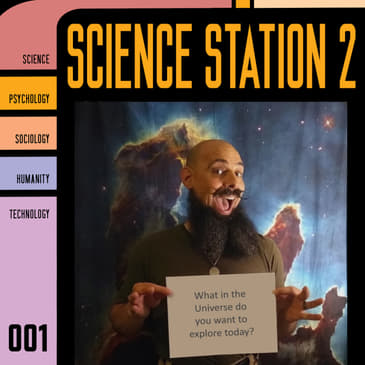


In this first episode of Science Station 2 host Hayley Stoddart and guest Dr. Ethan Siegel discuss the social progress that is seen in Star Trek, then compare that to where societies of Earth are currently and what will potentially need to happen for us to achieve the level of global equality in Star Trek. How do we start the process of achieving true equality in the United States, then translate that on a global scale? What policy changes need to happen? Who decides what needs to change first, and how do we make it happen? These are questions that Hayley and Dr. Siegel ponder in this first episode of Science Station 2.
[00:00:00] Coconut! Welcome aboard Science Station 2, where the corridors are filled with blue shirts
[00:00:19] and discussions of the heart and soft sciences can be heard from every corner.
[00:00:30] Welcome listeners to the first episode of Science Station 2. I am your host, Haley Stoddert.
[00:00:40] And today with me, I am very excited to have a special guest to discuss the topic.
[00:00:46] It is Dr. Ethan Siegel. Welcome aboard Science Station 2.
[00:00:51] Oh well it's my pleasure you know. I wasn't ready to take the teleporter but I took the shuttlecraft over
[00:00:57] and it's great to be here. So thanks for having me and I'm looking forward to a fabulous discussion.
[00:01:03] I am so excited to have you on. We have talked before and you are a scientist, so I'm really
[00:01:12] excited because you have this topic that we're going to discuss and we can throw in some
[00:01:17] science into this discussion about where we're going, how we're going to get there, and we're going
[00:01:22] to kind of discuss this, how do we get to Star Trek? How do we get there and what is it going to take
[00:01:29] for us not only scientifically, technologically, socially and philosophically. And so I'm really
[00:01:36] excited about this. You know, I am too and I think you bring up just an excellent point.
[00:01:41] Just write off the bad is that when you think about Star Trek and where they are you know,
[00:01:46] 200, 300, 400 years in the future. Yeah they have technology that is so advanced that it does
[00:01:54] literally seem indistinguishable from magic to us that you have them, you know just materialize
[00:02:01] whole objects out of what appears to be nothingness and then you have a permanent object that you can
[00:02:08] eat or you could play as a musical instrument or you could use as a tool like way beyond what any 3D
[00:02:15] printer can do. You can travel faster than the speed of light, you can communicate faster than
[00:02:21] the speed of light. Star Trek has all of these things but what they also have is a lack of some
[00:02:30] of the major sources of conflict on Earth today that they don't have poverty, they don't have starvation,
[00:02:40] they don't have malnutrition, they don't have a world ravaged by diseases. And so when you look
[00:02:47] at both how science has advanced and you look at like oh like look at how everyone's life is better
[00:02:54] but that second part of it is huge because it's everyone's life is better, they don't have a
[00:03:01] homelessness population, they don't have an inequality problem although in some incarnations
[00:03:08] of Star Trek they get into that and you do, it's not like the original series or next generation where
[00:03:14] oh here we are on the flagship and everything is no like we're over here in the outskirts of the
[00:03:19] galaxy and we're cleaning up the mess of a civil war or you know we're in the middle of another war
[00:03:25] with the Klingons because you know you fight, fight, fight. So there are these interesting things and
[00:03:33] I think it's really worth looking at from a scientific perspective when it comes to hard physical
[00:03:40] sciences but also from that sociological perspective, from that philosophical like how do we need
[00:03:47] to evolve as individuals and as a society in order so that this dream, this vision of what the
[00:03:57] future can be, can actually come to fruition. Yeah and it's really interesting that we get a lot
[00:04:04] of episodes in Star Trek where they're looking at encountering another planet and that planet is
[00:04:11] going through things that maybe today on Earth we would be going through and so it's a nice
[00:04:16] reflection of like how far Starfleet and the Federation have come from those things and how far
[00:04:24] Earth has gone from those things to contrast it to a planet that they encounter that's got a
[00:04:30] civil war. We see that in deep space 9 and so there's a lot of conflict but it doesn't necessarily
[00:04:35] happen within Starfleet itself, you know the crew doesn't necessarily have conflicts which I don't
[00:04:41] think happens. I mean it's still people and people have problems, there's unresolved conflict
[00:04:47] and issues within their own person that's going to affect their relationships with other crew members
[00:04:53] so we don't see a lot of that happen but it's still going to be there and so I,
[00:04:58] it's fascinating to take this look of like okay we can see some of these technological advances
[00:05:04] that have happened you know we have cell phones we have laptops we have computers we have tablets
[00:05:10] but we're so far lacking in the social aspects and the soft sciences of advancing towards this
[00:05:19] future and what we need to do to get there. And so that's where we're kind of I think lacking the
[00:05:26] most in. You know that's really interesting point because when I talk to a lot of people about
[00:05:32] Star Trek they really want to know like okay what do we need to have warp drive, what do we need
[00:05:38] to have a transporter, to have artificial gravity, to have that's what they think of is they think
[00:05:44] of the big technological advancements and that's what they want. They want those conveniences to be
[00:05:51] part of their modern daily life you know they they they want to have all the fun of alcohol but
[00:05:57] they want to be able to sober up and not have the dead brain cells in the hangover so so they want
[00:06:03] to scent the hall but at the same time that they think about things like that you know at the same
[00:06:09] time that we think about oh my like with all of the violence problems we had and with the
[00:06:17] policing issues that we have wouldn't it be wonderful if we had a phaser that we could set to
[00:06:22] stun and that we would not have these lethal encounters when non lethal force with this technological
[00:06:29] advance could do such a good job and I I agree with you that I guess the way I think about it is
[00:06:40] from Star Trek if the Vulcans are out there and watching us and just waiting for that moment where
[00:06:48] human civilization as an enterprise has advanced far enough that they can make first contact
[00:06:55] that we're ready for it that it won't violate the prime directive of interfering with the development of a
[00:07:03] let's call it a developing planet. How do we do that are we ready for it? I mean I I think it's
[00:07:14] really interesting to go back because I was lucky enough when I was born in the 70s I had all
[00:07:23] for my grandparents still alive when I was born and I got to know them three of them lived into old age
[00:07:31] so I got to spend a lot of time with them and this was the World War II generation after both
[00:07:37] my grandfather's fought in World War II most of most of the men of that era fought in World War II
[00:07:46] the women all went to work and worked in whatever industries were around to work in
[00:07:52] everyone pitched in to do that and we fought what at the time was basically like the greatest
[00:08:00] evil the world has ever seen. The the access powers, the culmination of imperialism, the you know
[00:08:07] the genocide of huge numbers of people just tens of millions of people and and we really tell
[00:08:15] this story to ourselves of the world came together to defeat evil like this people of enormously
[00:08:22] different ideologies all joined together and for a little while it looked like planet earth was
[00:08:30] sort of on the right track that you know despite our differences that we could understand each other
[00:08:37] that we could work together for a common goal and that it seemed like like nationalism might be
[00:08:45] on the way out where we could all sort of take a broader view you know we went to space we saw
[00:08:51] the earth from space where there are no national borders there are no colored lines on the map on
[00:08:58] of earth from space and so you know there was this hope that that this would just be a steady progression
[00:09:06] towards creating the future that we want and I think the the last few years and decades especially
[00:09:12] have shown us that this is not a slam dunk you know we we hear things all the time about how the cost
[00:09:20] of freedom is constant vigilance and the the price of freedom is that it's never more than one
[00:09:25] generation away from extinction and you know I think we have to remember that any road that we
[00:09:35] have walked down that we can always choose our own path and say this is a wrong road and it's time
[00:09:44] to turn around or it's time to take a detour it's time to change course because I'm with you I want
[00:09:51] to get to that utopian star trek future where where all of these basically blights on our society
[00:09:59] and civilization that we have I'd like to see them improve and I think I think maybe the best way
[00:10:08] to do this is you know I this is going to sound a little judgey of me but I'll own up to it
[00:10:14] is one of the ways that I judge people when I meet them is when at some point in a conversation
[00:10:24] it comes up that some person or some group of people that they are not a part of that group
[00:10:34] is facing some kind of oppression is facing some sort of social political economic
[00:10:43] difficulty in society it could be because the person's skin color or it could be because of their
[00:10:49] upbringing or it could be because of their country of origin or their religion or their gender
[00:10:55] sexual orientation any of these things and I do very much admit to when I see how any other person
[00:11:07] responds to a group that they are not a part of in distress that is very much how I judge them
[00:11:15] I look is is there compassion for what this person is facing even if it's something you don't face
[00:11:23] is there this willingness to do something on their behalf especially if they don't have the power
[00:11:33] to stand up for themselves the way that someone else could make a different standing up for them
[00:11:39] it's sort of that question that we deal with in Star Trek all the time of when do you get involved
[00:11:47] to what extent do you get involved and how do you get involved when when I first started watching
[00:11:55] next generation you know I was a young teenager and my favorite character at the time
[00:12:02] was Will Riker because he was a lot of things that I wasn't he was he was tall he was conventionally
[00:12:09] attractive he could be affable and sociable with a lot of people he and he was always like oh
[00:12:19] like if there's a fight going on between this victimized person or the culture and this
[00:12:24] a pressure a pressure culture he's always quick to jump in on behalf of the oppressed people
[00:12:32] and as I got older I started to like Will Riker less and less and I started to like Jean
[00:12:40] the card more and more because Picard would always have gone through well what are the consequences
[00:12:49] if I do this right if this Klingon vessel is getting attacked by this other Klingon vessel
[00:12:54] and our friends are on this Klingon vessel that's getting attacked what do we do yeah Riker
[00:12:59] Riker he'll he'll go open fire on the you know the enemies of our friends and and he'll do that
[00:13:07] Picard is like you know what I'm not going to start a civil war I'm not going to start a war
[00:13:14] of the federation with the Klingons when the Klingons are having their own civil war
[00:13:19] I'm going to be more circumspect about it and I think a lot of us when we
[00:13:28] come into a taxing situation when we especially when we're new to it we have that impulse that
[00:13:34] we want to act and we want to fix it and we don't take the time to listen and learn
[00:13:43] about the nuances of these perspectives that we ourselves don't possess so we're quick to judge
[00:13:50] and we're quick to anger and we're quick to make decisions about what's right and what's wrong
[00:13:55] without having all the necessary information and I think this idea of
[00:14:04] taking the time you need to draw the responsible conclusions to figure out what's going on before
[00:14:12] you act I feel like that is an art that we should be cultivating more and I think we've really
[00:14:21] seen that here on earth play out over the course of the pandemic that people are just
[00:14:27] livid over that anyone could have not known the right answer about what's best what all the evidence
[00:14:34] says all along we still don't know a whole lot of things there's so much we still need to learn
[00:14:42] because there are new things happening and new variants forming and the science is changing
[00:14:47] and growing and we're learning more of it this impatience that we have of why aren't all of our
[00:14:55] problems fixed right now they're just if you just put me in charge I could just fix all the
[00:15:00] problems I know so many of us just think that but but there has to be room to understand what are
[00:15:07] people's perspectives what is it stake for them because it's difficult to come to a solution where
[00:15:17] everyone doesn't just get something they want but everyone can look at this and say you know what
[00:15:23] this is what progress looks like this is this is us reckoning with the full gamut of whatever
[00:15:30] this situation is and finding ways to work together for the common good that this is not just
[00:15:38] what's best for me and the things I care about that this is this idea of what is good for
[00:15:46] civilization as a whole is also good for me and I sort of think about this in terms of
[00:15:53] geez isn't it isn't it better when everyone is educated when everyone is well fed when everyone
[00:16:00] doesn't have head pain because they have tooth infections isn't it great where everyone can see
[00:16:08] and everyone can hear and everyone you know these are the things that that I would like to think we
[00:16:14] could all agree are are goods in the world that that knowing things and increasing people's happiness
[00:16:21] and comfort levels and security is a good thing and that decreasing all of those levels of
[00:16:28] insecurity housing insecurity food insecurity health insecurity if we can decrease those this
[00:16:36] is like the rising tide that helps us not just as individuals but to recognize that we're all part
[00:16:44] of the same enterprise which is human civilization and that when we move the needle forward in one
[00:16:52] way for all of us it helps us all move forward together now those are some really great points
[00:16:59] so I want to ask you in this discussion do you think as our we've talked about how the technology
[00:17:07] is kind of advancing faster than we are socially towards a Star Trek future do you think our technology
[00:17:14] advances will help us at some point do you think that the balance will kind of that the degrees
[00:17:22] of separation between our technology advances and our social advances towards this future that we see
[00:17:27] in Star Trek do you think that gap will ever shrink do you think that's a good question right that's
[00:17:34] a good question I mean I think there's a point where everyone needs to realize that just because one
[00:17:42] person one person can't have all the good rights collectively as you're saying we need to collectively
[00:17:49] increase the positivity and health of everyone at the same time rather than just certain populations
[00:17:58] or certain groups but do you think that gap will ever decrease I mean that that is a good question
[00:18:06] the reason I say that's a good question is because it makes me think of you know it could go either
[00:18:12] way right the gap could not close the gap could even widen or the gap could close substantially and
[00:18:18] that all to me depends on who gets access to enjoy the fruits of these technologies you know we have
[00:18:31] a large number I think it's hundreds of thousands of kids a year go blind because of vitamin A deficiency
[00:18:38] we have basically the cure for this type of blindness which is to say we have genetically engineered a
[00:18:49] type of rice it's called golden rice that if these populations which rice is a huge part of their
[00:18:58] diet if they changed the rice they're using now for golden rice no one would have a vitamin A
[00:19:07] deficiency that you could just grow this other type of rice instead of this type of rice you would
[00:19:14] get all the vitamin A that you need and then hundreds of thousands of kids wouldn't go blind but a few
[00:19:21] years ago there was this enormous effort to grow golden rice and I guess I would call it an active
[00:19:30] ecoterrorism people were afraid that these genetically engineered golden rice organisms
[00:19:43] we're going to do all sorts of things that they don't do but that what they specifically thought it
[00:19:49] was going to do is an important what's important is that they destroyed it and insured that this
[00:19:55] blindness plague would continue for years and years because they burned all the golden rice
[00:20:02] because they were afraid of it now I'm not saying that everything that happens happens for a reason
[00:20:11] similar to that right there are all sorts of reasons why people don't get access to the latest
[00:20:17] technological advances to the latest developments there are a lot of fears over 5G for example
[00:20:25] that are wholly unfounded but I have a feeling that when people are like well I could either get the
[00:20:30] new phone that's 10 times faster than the old phone or I can sit on my old phone like it's a dial
[00:20:36] up modem I'm probably going to get the new phone and I'll discover that my 5G fears were unfounded
[00:20:44] not everything is that simple right we we still have countries like Ethiopia and Eritrea
[00:20:54] that you know at best I would say they have a ceasefire between them but I think 20% of the
[00:21:01] Eritrea in adults at any given time are an active military duty on the Eritrea Ethiopia border
[00:21:09] that's that's pretty big crisis you know we have you know we have a risk of an enormous number
[00:21:18] of people dying in a country like India right now as a result of the pandemic and still we have
[00:21:26] so much misinformation circling about that that people I guess are so invested in in terms of their
[00:21:34] identity that things be a certain way that they're not willing to change even when the evidence changes
[00:21:42] I don't know that there's a cure for that but I do know that if we can say you know what
[00:21:49] here are the benefits of what we've developed here are the benefits of what we've learned and
[00:21:54] here's all of these things and we are going to undertake a collective effort to make sure
[00:22:02] that everyone who can benefit from these advances reaps the benefits of those advances
[00:22:09] I think that's how we get there that's how we build you know the the Star Trek type future
[00:22:18] that we want is we say you know well this doesn't mean that you know healthcare is going to be
[00:22:26] really good for the people who can afford it and not for anyone else it doesn't mean like well
[00:22:31] you know the people who are the most successful they get to go to Mars they get to own all the land
[00:22:38] they get to profit every time you know someone else labor and that increases inequality
[00:22:46] you know I think if we can just make it a practice to put ourselves as best as we can into the shoes
[00:22:59] of people whose shoes we've never walked in if we can do what we can to empathize with the
[00:23:07] challenges they're facing the same way you would if a friend or family member had an illness
[00:23:14] physical or mental that you didn't have the same way it would if a if a child or a parent
[00:23:20] was facing a difficulty that that you never encountered in your life but that you but that you saw
[00:23:26] they were suffering like if we can care about one another and extend that compassion to one another
[00:23:33] I think that's that's how we get there you know I I don't want I don't want to get you know
[00:23:41] 20 vaccines to make sure I'm safe from coronavirus I do it I take all the vaccines give me
[00:23:47] phyza mederna johnson and johnson astros it give me all of them I'll take all the different
[00:23:52] immunities combined thank you but what we want is we want the people who need those vaccines to get
[00:24:02] them I still optimistically look towards a world where the diseases that can be eradicated
[00:24:11] through technology and good behavior I still believe in a world where we do it where we eradicate
[00:24:17] these diseases or at least we eradicate these diseases in humans I'm all for a world where
[00:24:24] by collectively working towards a common good a common social good a common health good a common
[00:24:32] economic good we can be that rising tide that lives all boats we can we can make that happen but
[00:24:39] but everything depends on that you know if if we develop all of the this great you know rocketry
[00:24:46] technology and we can take Elon Musk and you know his 1000 favorite multi-millionaires to Mars
[00:24:57] that's not really going to benefit humanity the same way that solving the carbon crisis would
[00:25:05] benefit humanity it's not going to benefit humanity the same way that ending world hunger would
[00:25:11] benefit humanity or for that matter eradicating corona viruses would benefit humanity so
[00:25:19] I think when you're asking about how do we do that how do we get there we have to start thinking
[00:25:28] not of ourselves as individuals that are separate from the whole of human society but as
[00:25:35] people who are inextricably tied to the human enterprise and if you know
[00:25:44] if if I succeed and you fail that means we both fail I think that mindset is something that
[00:25:55] we don't even just need to embrace it we have to understand that this is reality that if
[00:26:01] that equality for me and not for you is not equality exactly and that's that's something I think
[00:26:08] that is huge and right now we don't have that and I think that's going to be one of the key factors
[00:26:14] if almost not the key factor to getting to this idea of Star Trek outside of the technology we have
[00:26:23] to understand that just because I have something doesn't mean that it takes away from you and
[00:26:30] just because you have something doesn't mean it takes away from me but we need to be equal and we
[00:26:34] need to have this compassion and sympathy which is something I've been seeing lacking and
[00:26:44] one thing I think that really helps foster that is active listening and you would you'd said
[00:26:49] something earlier and I didn't want to pipe in but I feel like so many people listen but
[00:26:54] they listen to respond rather than to listen to understand and we're so reactionary at this point
[00:27:02] in time and we're selfish we all are some people are more so than others but I think collectively
[00:27:12] and globally so many people say well me me me I'm more important than anybody else I'm more
[00:27:20] important than anything else and until we reach a point where we understand that everybody has
[00:27:28] to grow together or no one grows together at all we're not going to get there even if the technology
[00:27:35] advances I think that gap will increase stay the same and only the people who can really afford to
[00:27:45] go out into space will go out into space and we'll still have this class system that we have in
[00:27:53] it's here in the US I'm definitely lower middle class that's for sure and I know that until we close
[00:28:01] those gaps we're not ever going to really get there which is really sad because we want to get there
[00:28:09] that's I mean yes Star Trek still has its problems but I think there's so much good right there
[00:28:15] that we can see and if other people could understand that if other people could see that
[00:28:22] hey if we all collectively rise together isn't that better than someone rising up higher than
[00:28:30] somebody else but there's so many motives in humans and so many people are not completely altruistic
[00:28:38] that I don't know if we'll ever get to that point unless some of these negative aspects
[00:28:44] people really don't focus on them and turn inward and look at themselves and say okay what am I doing
[00:28:50] that's not helpful what am I doing that's a negative thing what am I doing to keep others down
[00:28:56] it's not going to happen you know I like to a number of things that you said there I liked what
[00:29:02] you said about listening because there are a lot of people who listen in the sense that they're
[00:29:09] waiting to talk they have something they want to say and that's all they do is they sure you can
[00:29:14] say what you say but it's not like I'm paying attention to you and what you're saying I really just
[00:29:20] have my own point that I want to make I feel like this is really exemplified by the political
[00:29:26] discourse we have not just in the United States but around the world that people just have their
[00:29:32] own set of talking points and they harp on those and you know you see that people on Fox News versus
[00:29:39] people on MSNBC they're not even talking about the same issues they're not even in the same reality
[00:29:45] they're you know they're talking about whatever whatever it is they've decided the news should be
[00:29:53] but it isn't actually about the events that are occurring in the world and affecting people's lives
[00:30:00] and that's that's I think very detrimental because that's that's something that stokes divisiveness
[00:30:07] in us you know we can we can always do that we could say oh well we we we you and I we live in
[00:30:14] different states and we have different ethnicities and we have different you know the experiences maybe
[00:30:22] we have different education or economic backgrounds like we we could we could try to divide ourselves in
[00:30:27] all these different ways but we can also look at what we have in common we can also look at you
[00:30:34] know we're both human beings we live on earth at the same time we we see the world that has the
[00:30:43] same issues what can we do to help what can we do to help make things just a little bit better than
[00:30:53] they were before we came along onto the scene and I think I don't want to lambast self interest
[00:31:04] because I think it's important that we act in our own self interest I I'm a big fan of telling people
[00:31:12] and this is a lesson I think I had to learn that if you want other people to stand up for you
[00:31:19] you have to also be willing to stand up for yourself that you you are worth standing up for
[00:31:26] and by standing up for yourself you show other people that you are worth standing up for
[00:31:36] and I think I think that's an important lesson to learn so I'm not against self interest but like
[00:31:43] everything it's possible to have too much self interest it's possible to have self interest or
[00:31:50] ambition or whatever it is that that actively it actively harms the rest of society it actively
[00:32:02] harms those around you just like if I don't know if you have your family and you've got to get
[00:32:11] dinner for your family and you go out and you pick up dinner for your family and you eat everyone's
[00:32:16] dinner because you're hungry you haven't fed your family you did something in your own self
[00:32:24] interest that was to the detriment of everyone else and you know I say that and people think like oh
[00:32:30] well that's absurd no one would ever do that but but I feel like people do that every time they
[00:32:38] every time they choose to go out and blow their budget on alcohol instead of buying
[00:32:44] what you need in paying your bills I feel like people do that every time they you know they lie to
[00:32:51] their spouse about where they are and they just don't they don't tell them the truth because
[00:32:58] they're ashamed of it or they want to get away with something or whatever it is but you know I
[00:33:03] feel like there's always going to be that element to people that selfishness that here's
[00:33:11] what I want and I want to get it and I'm going to go get it regardless of who else is involved with
[00:33:16] it but I think that if we can recognize if we can even just say out loud to ourselves into each other
[00:33:26] that you know what things will get better for all of us if we collectively act in the best
[00:33:36] interest of all of us I might be afraid of getting a vaccine but if I go out and get the vaccine
[00:33:43] because it makes everyone safer then I should do it if you need to make a rule where you know what
[00:33:50] Ethan if you don't get that vaccine you you can't participate in these public activities uh
[00:33:56] you can't go to public school you can't send your kids to public school you can't go to the DMV
[00:34:03] because it's not a safe place to be you can like this is this is what we do we I'm still not a fan of
[00:34:12] telling people how they have to live because I'm not a fan of telling people there's one right way
[00:34:17] to do things but I at the same time I am a fan of saying you know what we don't like to force people
[00:34:25] to do things we've decided that that is like fascism you can't make people do things but you sure
[00:34:31] can give them incentives to do it and you sure can give them disincentives against not doing it
[00:34:38] yeah I mean we don't have a federal law that says you have to be 21 years old to drink in the united
[00:34:45] states but when I was in high school Louisiana was the last state where the drinking age was 18
[00:34:53] and uh I even knew some people who would make the long drive down there to get alcohol
[00:35:00] and drive back because they were allowed to do it I think it was when Clinton was president
[00:35:07] uh what he did was he tied highway funding federal highway funding to compliance with your states
[00:35:20] drinking age should be this um and Louisiana was like well we need highway money we we need to
[00:35:26] maintain the interstate infrastructure systems so we want that money will raise the drinking age
[00:35:33] to 21 that was it no one no one legally challenged that or anything I think if you
[00:35:40] if you want people to engage in the behavior you want them to engage in you need good leadership
[00:35:47] and that starts in a number of different places but it starts from people demanding
[00:35:55] that this is the type of leadership that we want you know we we are a representative democracy
[00:36:01] here we can we can choose who represents us it's it's very difficult to do that when you're up
[00:36:10] against you know large large sums of money and power and influence but um but I'm not ready to
[00:36:17] give up hope yet I think that when we think about you know all of the changes we have been able to
[00:36:26] affect all of the ways that our world has improved even even over my lifetime I remember you
[00:36:33] know what life was like in the early 1980s versus now 40 years later in the early 2020s
[00:36:41] I I think most of us have it pretty good in a lot of ways but I think we're also keenly aware
[00:36:50] of the ways we don't have it good and that people around us don't have it good and you know
[00:36:57] another thing you were saying I would just encourage people to be compassionate towards one another
[00:37:02] I I have a lot of negative interactions with people these days because someone will come into a
[00:37:10] situation and they will I don't know what's happened to them I don't know what their life has been
[00:37:17] like over the last year I don't know how many people they've lost I don't know how many illness
[00:37:21] is or injuries they've suffered I don't know what sort of mental health issues they're having
[00:37:27] I don't know what family difficulties they're having I don't know what financial difficulties
[00:37:32] they're having but I'm sure they're there I have some of those difficulties I'm sure you have
[00:37:38] some of those difficulties I'm sure most of us have some or all of those difficulties to some extent
[00:37:44] I think it goes so far to just recognize the humanity of other people to recognize that
[00:37:54] is everyone doing their best no but a lot of people are they're doing the best they can with
[00:37:59] the energy and the resources they have at their disposal it's not always enough it's not always
[00:38:05] adequate but this is what people have to work with and when it's not enough for them to cope with
[00:38:14] what needs to be coped with or to reckon with what needs to be reckoned with can we offer them
[00:38:23] compassion and support instead of lambasting them that they didn't do the thing we wanted
[00:38:31] from them and I think as soon as you start doing that as soon as you start viewing people
[00:38:39] as people with similar struggles and difficulties to your own with these human struggles and
[00:38:46] difficulties that they have it suddenly becomes much much harder I would say it even becomes a
[00:38:53] calling to treat them like they aren't worth every bit as much as you are yeah and I think that's
[00:39:02] the thing it's you know I I work a mental help and we meet our clients where they're at and I
[00:39:10] think that's the thing a lot of that's the other thing I think a lot of people need to understand
[00:39:14] is meeting others where they're at not where you are not where you expect them to be but where
[00:39:22] they're at and that lends you to being open to understanding and open to listen to where they're at
[00:39:31] and help in whatever way you can and so I think that's something that you know in all of this
[00:39:39] that's going to help us get there and that's missing in a lot of people and this understanding
[00:39:47] and saying okay I'll meet you where you are let me let me come down to you and that's okay
[00:39:54] it's okay to come down to somebody else's level it doesn't mean that you were there but it just
[00:39:59] means that's where you're meeting them and that's a big thing it's a big thing in recovery is meeting
[00:40:04] people where they're at and so gosh it's interesting to take a load of all this because there's so many
[00:40:11] ways that we are so far from getting to anywhere near this utopia of Star Trek and you know there's
[00:40:21] so many different steps to take to get there I think emotionally socially economically I mean
[00:40:28] you know money money is a big thing there's no money in Star Trek and how do we get to that point
[00:40:34] where money isn't a driving factor because I think that is a big thing in a lot of things that
[00:40:40] is keeping us from advancing and having that gap close in between the technology and everything else
[00:40:47] to get to this is because money is such a big thing you know you you mentioned oh this person has
[00:40:53] more money so they're going to get more influence politically but if we took that away and take
[00:41:00] that out of the equation maybe the person who should be who's going to help these advances that
[00:41:07] we need socially and economically maybe they would win maybe they would get into those positions you
[00:41:13] know I look at my state it's a very Republican state there's a few Democrats spattered here in
[00:41:20] there that I get elected but locally there's not even Democrats that run because there's no point
[00:41:28] for them to waste their money yeah yeah there are a lot of places a lot of particularly verbal areas
[00:41:34] and I know them where where the D stands for defeat if you have a D next to your name it's
[00:41:41] obviously like you don't have a chance I I always had thought that you know when I was young
[00:41:50] that you could run as anything and people would judge you based on your merits and you know of course
[00:41:59] that's an extremely naive attitude to have but it's just amazing to me how much weight we put behind
[00:42:13] our own opinions about things and once once we've decided what our opinions are so many of us
[00:42:24] are resistant to changing that that if we hear any evidence that appears to support our view
[00:42:31] we're gonna remember that and we're gonna take that in we're gonna use that to bolster what we think
[00:42:36] and if we hear anything that conflicts with what we think we're gonna find ways to discount it
[00:42:43] and poke holes in it and say like oh but this is an important and I think part of what needs to
[00:42:52] be this culture shift in making Star Trek's future closer to reality is we need to value the
[00:43:04] act of learning and changing your mind based on new evidence higher than being right all along or
[00:43:15] never having had to say I was wrong because we are wrong all the time I don't care who you are
[00:43:24] listening to this I don't care if you're Einstein I don't care if you're Elon Musk I don't care if
[00:43:29] you're my dad you are gonna be wrong sometimes you are wrong sometimes you do not have enough
[00:43:37] information to make an informed decision and then later that information becomes known or sometimes
[00:43:45] the information was always known but it wasn't known to you or sometimes um new evidence just got
[00:43:52] discovered or sometimes it got reinterpreted in this new context and now we realize well we thought
[00:43:58] it was this way but now it's the other way imagine being so stuck in your own thoughts
[00:44:05] that you know you were like oh look I thought if I mixed ammonia and bleach I'd get extra clean
[00:44:12] clothes but I learned if I mix ammonia and bleach I make a terrible noxious mess that can kill
[00:44:19] me and everyone in my house so what do I do well I can either say oh ammonia has good cleaning power
[00:44:28] and bleach has good cleaning power and I'll just make them call the fire department every two weeks
[00:44:33] when it's time to clean those things up or I can learn ooh I should never mix ammonia and bleach
[00:44:41] and I should teach everyone to never mix ammonia and bleach and there are other ways to get
[00:44:46] things clean that don't involve mixing ammonia and bleach don't mix ammonia and bleach listeners
[00:44:52] so I guess one thing I have to ask is I've got a kid in school and I like you I am a bit younger than
[00:45:02] you but I grew up in the 80s in the 90s and this deductive reasoning and this thinking for yourself
[00:45:09] I remember it was a big thing like write your own papers have your own thoughts and granted we didn't
[00:45:15] really have the internet I mean I did all my research papers based off going to the library
[00:45:20] in the card catalog and looking up things and you know the Britannica psychopathic Britannica you know
[00:45:27] so do you think that I'm a big fan of education I'm a big fan of extending your education
[00:45:36] getting some college even if it's not your thing doing something trade school something but
[00:45:43] this deductive reasoning and really critical thinking do you feel that that has kind of declined
[00:45:51] with people in general or certain generations just aren't taking a look at things because
[00:45:59] that is a big thing if we cannot say here's Apple and here's an orange and make those conclusions
[00:46:07] based off of which one is going to be the better thing which has the consequences that are going
[00:46:12] to be better for me versus all these negative ones do you think that's something that is lacking
[00:46:19] that could lend us to get to this place where we could get to Star Trek if people can't critically
[00:46:26] think about different topics and make a choice off of that it's it's a very tough thing because
[00:46:35] I don't I don't think I have this attitude that I think things were better 20 40 60 years ago
[00:46:45] and they're worse now no yeah just think that people are kind of the same as how they've always been
[00:46:53] and you know instead of kings or nobles we have billionaires and instead of you know
[00:47:01] quigs and democratic republicans we have democrats and republicans but we you know all
[00:47:09] most things haven't really changed most people and we do this too I do this too we take
[00:47:15] intellectual shortcuts we don't have the time or energy to examine everything in glory detail
[00:47:23] but the big thing that I would like to see return is this valuation rather than a devaluation
[00:47:35] of expertise you you asked me to be on your podcast because like oh well Ethan's like an expert
[00:47:42] on Star Trek technology and he has a PhD in astrophysics and he wrote that book that I like and
[00:47:47] you know and yeah I have those things I have those areas where I'm an expert in that but even in
[00:47:55] those fields I have to be learning new things you know I I was talking to someone just a few days ago
[00:48:03] about how well when the Milky Way and Andromeda merge what type of galaxy are we gonna wind up with
[00:48:09] in 20 years ago she wrote a paper telling everyone oh it's gonna make an elliptical galaxy and of
[00:48:15] course it will and I asked her about it and she's like it's very unlikely we're gonna make an
[00:48:21] elliptical galaxy actually we're probably going to be some sort of distorted spiral that'll
[00:48:28] probably settle down and still have a disk and still have arms and still have gas and it won't
[00:48:32] be an elliptical after all what's changed well we learn more things we learn more information
[00:48:38] we made new observations we took new measurements we improved our simulations and we learned
[00:48:46] some things that were counter to what we expected you need an expert to do that you can't know that
[00:48:55] without the expertise so if you don't have the expertise you could go do your homework
[00:49:02] and you could find out what the majority of experts on the bleeding edge of the field are saying
[00:49:08] now but that's a lot of hard work especially if you don't have that expertise it's much much easier
[00:49:16] to say okay who are the experts who should I ask where should I go to get this information
[00:49:22] i'm gonna do as much homework as I can you know just like if I had a medical problem I'd want to
[00:49:27] do all the homework I could on it but when I go to the doctor and the doctor sends me to the
[00:49:33] specialist and I go to the specialist I don't want to sit there and tell the specialist what I
[00:49:38] learned by searching this and by reading PubMed and no I want to I want to tell this expert my experience
[00:49:47] in my body and I want them to tell me what I should be doing about it and why I want them to
[00:49:56] synthesize something together for me to the best of their abilities because I know that what
[00:50:03] they've trained themselves to do the hard work they put in all those years of study that's not worth
[00:50:10] nothing that's not just well my opinion is just as good as your facts or your knowledge no I don't
[00:50:17] go to the doctor and tell them how to be a medical doctor I don't go to the mechanic and tell
[00:50:22] them how to fix my car I don't go to I don't go to a world class painter and pull out my fingers
[00:50:29] and say look I know how to paint too I I don't do that the same way I don't really appreciate it
[00:50:35] when you know someone without a degree in physics comes to me and tells me like oh do you want to hear
[00:50:40] my theory of the universe do you want me to tell you why Einstein is wrong and Heisenberg is wrong
[00:50:46] in a no like I bet you don't I bet you don't want you to tell me that not because you don't have
[00:50:52] interesting thoughts but because there probably isn't something that has a merited value to it
[00:51:01] there you probably don't have something that I or no one else has ever thought of before
[00:51:09] that is just brilliant and novel it's probably not the case and it's probably not the case
[00:51:16] oh geez like we have lots of flaws as humans in our thinking like we are way more likely to believe
[00:51:25] a fantastic and unlikely explanation than just a small little lie like if I told you that oh you
[00:51:36] know that they they've genetically engineered green cows now you're like what I'm like yeah
[00:51:42] yeah they basically took a plant and they spliced its genes into a cow and there are now chloroplasts
[00:51:51] in cow cells they can absorb sunlight and they can photosynthesize some of their energy
[00:51:58] and when they eat grass that this actually helps them because it increases the green color so
[00:52:03] they're chloroplast become more active I mean doesn't this sound great Ethan's obviously lying
[00:52:10] like he's got to be lying and they genetically engineered a cat to glow in the dark but that's
[00:52:16] not the same no I am lying I did make that one up but that's the sort of story that if I told it
[00:52:22] convincingly enough there would be some people who said wow really just like 25 years ago I remember
[00:52:30] someone telling me that well you know there's this DNA evidence in the case but I think that means
[00:52:37] OJ's son did it that his son wanted to get his father out of the marriage and he went murdered
[00:52:44] his his father's ex-wife and her new lover and that's what uh and that's what really happened
[00:52:51] that OJ didn't kill it but he took the fall to cover up for his son and I you know and I
[00:52:57] listen to this and I'm like this person first off doesn't know how DNA works but second off even
[00:53:03] if they did know how DNA works it was such a compelling lie to them where they felt these pieces
[00:53:11] were sliding into place um a lot of people just can't accept that no one's in control of what's
[00:53:19] going on in the world um that that there is no puppet master behind the strings that the world
[00:53:26] is just a violent and chaotic place where people are lashing out and doing things illogically
[00:53:33] people do not always act rationally and I think we need to we need to accept that and and we need
[00:53:42] to not reject people because they have behaved or are behaving irrationally but we need to show them
[00:53:52] that there is a path towards doing it right and you need to model that behavior of here's how you
[00:54:01] do it right and like you said earlier uh that starts with treating them with respect and compassion
[00:54:08] and showing them that regardless of what your differences are or how your differences manifest
[00:54:16] that we can work together to build a better life a better community a better world for all of us to
[00:54:25] live in no I definitely agree I think this is something that do you think it would be better started
[00:54:33] uh locally like small little communities and have it spread or does it need to start larger than that
[00:54:41] you know this idea of treating people with compassion and understanding where they're coming from
[00:54:47] and creating these disparities decreasing these disparities between people how do we how do we do that
[00:54:56] you know I I think there are positives towards any approach and so I think if you can get
[00:55:08] one person to act in a positive way regardless of what that way is you've done something good
[00:55:14] but this is the sort of thing where I think you know whether I talk about the people in your little
[00:55:21] town in Idaho or whether I talked about like we spoke about earlier about the people living in
[00:55:27] Eritrea like I think it's very important to recognize the humanity and one another even in those of
[00:55:37] us who look different or believe different than we ourselves do and I think it's important
[00:55:45] to put your effort where you will feel like it isn't being wasted if you feel you
[00:55:56] where you can make a difference is that the national or international level put your efforts there
[00:56:03] if you feel like where you can make a difference is at your local level put your efforts there none
[00:56:09] of it is bad this is this is something I used to struggle with a lot when I was younger is like
[00:56:15] there are all these different causes that I feel are positive and that I'm passionate about and I
[00:56:20] don't have the time or energy or money to further most of them honestly I can really only pick a
[00:56:29] small number of things where I can make a difference the important thing is to do them whatever they are
[00:56:36] if Bill Gates is passionate about ending illnesses and creating vaccines and eradicating diseases
[00:56:48] yeah I mean if I had Bill Gates money would that be the number one thing I would focus on I don't know
[00:56:53] I doubt it but I'm not going to say Bill Gates is a bad person because he's spending his money
[00:57:02] on doing a good thing in the world that isn't the thing I would choose we I think it's very important
[00:57:12] that we honor the efforts that we spend trying to improve the world around us I don't think everyone
[00:57:23] even needs to be altruistic you just need to do something that you recognize is positive and
[00:57:33] is going to impact others positively where you are or where you're not like just that it's going
[00:57:40] to positively impact others that's something all of us can do we can't all do it to the extent
[00:57:46] we would like we can't all do it you know at the level we would like or with the intensity we
[00:57:52] would like but anytime you do something good especially if it's something good that is going to
[00:57:59] impact others or the natural world you know I think even if it only helps one person you can
[00:58:08] know you did something good helping even one person I don't know what the best solution is because
[00:58:15] this is a this is too big a problem for one person to solve it's probably too big a problem for
[00:58:21] one generation of people to solve but if we can build a world where people are freer from oppression
[00:58:32] and suffering and disease and illness and crime and violence and war and food insecurity and all
[00:58:41] of these other things that are just blights on our existence here I think we should always always
[00:58:48] celebrate that progress no matter how small it is it doesn't mean you should rest on your laurels
[00:58:54] of that progress but it's important to take time out to appreciate even the small steps that move
[00:59:01] things forward yeah definitely and in this discussion you know I was sitting here thinking about as
[00:59:06] you're talking it's really that Star Trek basically made it so every single person had their
[00:59:15] base needs those maslow's hierarchy of needs those ones that are super important for you to
[00:59:22] advance in anything else to move beyond yourself are met their physical needs are met
[00:59:30] and their psychological needs are met because no one's worried so much about being
[00:59:36] feeling insecure unsafe because of you know war is gone I mean I'm not saying conflict is gone
[00:59:43] in Star Trek they're still conflict and we didn't see earth a lot in Star Trek I mean they come
[00:59:49] and they visit they go to Starfleet or the Dacer Minstitute but they don't see earth but we can
[00:59:55] extrapolate that that is not an issue anymore once we get past what we see in deep space nine with
[01:00:01] the bell riots and you know the third world war and that kind of stuff but it's very much that
[01:00:07] these base needs maslow's hierarchy of needs are met and we know now that even if someone has those
[01:00:16] met they can grow and flourish and thrive well beyond what they thought their expectations of
[01:00:25] themselves were but until those base needs are met which is housing food it's illness it's
[01:00:33] economics once those are taken care of and filled secure and filled people thrive and grow so I think
[01:00:41] that's something that we're gonna have to get to not just locally where we live in our towns and
[01:00:49] our counties states countries globally we have to get to this place where everyone's base needs
[01:01:00] are met and kept so that people can flourish and thrive and then maybe that gap would close a little bit
[01:01:07] I think that's an outstanding plan I mean if we realized how little we would actually have
[01:01:16] to invest in global infrastructure in order to make sure everyone has enough food make sure
[01:01:24] everyone has enough water make sure everyone has enough medicine make sure like has the right medicine
[01:01:33] you know these these are basic basic needs and they are needs that a lot of people do not have met
[01:01:42] both in this country and also across the world but at the same time I believe a greater
[01:01:50] percentage of people are having those needs met and there's still hundreds of millions if not
[01:01:57] billions of people who don't have those needs met and I don't mean to like marginalize their plight
[01:02:04] but if the goal is to make sure everyone has those needs met then as we progress towards that goal
[01:02:15] we should learn lessons of what works what's effective what's reaching these people and what
[01:02:22] wherever things falling through the cracks who still isn't being served and how do we get there because
[01:02:28] you're right you know one of the ways this was really brought home for me is my first job out of college
[01:02:35] I was a public school teacher and I had a number of kids in that school who could not focus in
[01:02:43] class just would not pay attention would not focus because some of their basic needs were not
[01:02:51] being met I had one kid who was in excruciating pain all day because the kid had never been to
[01:02:59] the dentist and the kid had a toothache and you cannot expect to pay attention in school if you are
[01:03:10] in constant unmanaged pain you know and so this is the sort of thing that honestly if you would spend
[01:03:17] like two or three hundred dollars to get that kid's tooth problem fixed and just get them
[01:03:23] toothbrushes and toothpaste and dental floss and some really basic things that kid would have a
[01:03:30] chance in a way that they didn't have a chance because they didn't know what it was like to go
[01:03:35] through life without that excruciating pain and everything they did it's we have this attitude
[01:03:43] that I see play out as someone who is experiencing an unfairness will complain this isn't fair
[01:03:54] and the response that I overwhelmingly hear that person receive is well life's not fair
[01:04:01] and I don't look at that as a solution like that's a statement of fact but it also doesn't
[01:04:09] do anything towards solving the problem what would go a huge way towards solving that problem
[01:04:16] is asking the person who's experiencing the unfairness well what can we do to make it fair
[01:04:25] what can we do to increase the level of fairness for other people who are coming up and facing
[01:04:33] the same adversities if we can start to conceptualize you know we see these problems and yep like
[01:04:41] if we start to ask what can we do about it what can we effectively do about it how do we do that
[01:04:47] right that that to me speaks to the difference between something being a dream which is what I would
[01:04:53] currently say is having that utopian star trick future be that that is it's a dream if we can
[01:05:00] transform that dream into a goal the only thing that separates a dream from a goal is steps
[01:05:08] is plans and steps to make that happen so I think when you're like well what can we do in our
[01:05:13] local communities is take a step identify something good you can do and take a step what can we do
[01:05:19] in the national discourse take a step what can we do showing compassion to others including those
[01:05:25] who aren't being compassionate in the first place that can be a big deal that can be a very big deal
[01:05:32] so you know it's kind of funny that we've had this whole conversation and I feel like
[01:05:38] of all the podcasts I've been on recently I probably talked less science on this one
[01:05:43] than than any others but I think that that it really is sort of interesting to approach this
[01:05:48] from a humanity perspective because a big way we get to where we want to be as a society is to
[01:05:56] recognize the value and humanity inherent in each and every one of us then when we start looking
[01:06:02] at this is this is not a this is not an ethan enterprise or a hailey enterprise or a me and my
[01:06:09] family or me in my town or me in my state or me in my nation that this is this is the human enterprise
[01:06:16] that this is the relationship between our species our planet and our universe the stakes seem
[01:06:25] so much larger than if it's just us so I think I think it's important to not lose that sense of
[01:06:36] largeness to not lose that sense of awe and wonder and to remember how short an amount of time
[01:06:45] we're all here for and that for me really makes clear how important it is to do good with the time
[01:06:55] that we have all over here no I I would agree with you thank you Ethan and I appreciate that this
[01:07:02] has been such a really fun discussion like I said this this isn't just about the hard science
[01:07:08] this this podcast is about the soft sciences because those are just as important in Star Trek
[01:07:15] even though we don't always see them a lot as the hard science as the technology
[01:07:21] because we have to have both we have to have the technology to get us there but if we don't advance
[01:07:28] ourselves socially economically emotionally then we'll never get there because we will be too
[01:07:36] focused on the chaos around us and not fixing anything that's broken to really be able to use
[01:07:45] that technology beyond the billionaires who can oh whatever I'm just going to go kind of thing
[01:07:51] because I can and that doesn't take us globally anywhere that just just leaves us down more path
[01:07:59] destruction where we won't ever get there which would be really sad in my opinion I mean I
[01:08:06] obviously agree with you but I think Star Trek did a wonderful job of this you know episodes
[01:08:12] of Star Trek are very very rarely focused on oh like if only data could solve this second-order
[01:08:18] partial differential equation then we can figure out how to like you know turn the thermocouples
[01:08:25] into auxiliary power and get the dilithium crystals working again and then we can go fast and get
[01:08:31] out of here I said no battle really it's not really how you know what Star Trek is all about like
[01:08:38] someone who's maybe not a fan of Star Trek might say that that's what Star Trek is about but
[01:08:43] Star Trek is much more about like geez I'm in this difficult situation and these people have a
[01:08:49] legitimate issue that they have you know an injustice and this other competing thing has this
[01:08:56] other injustice and I'm caught in the middle and none of it is fair to me but I have to make a decision
[01:09:03] on what course of action do we take and what outcome are we shooting for and then when chaos
[01:09:09] happens how do we respond to that and you know I think it really makes it clear that your finest
[01:09:19] hour isn't necessarily about when you do your best work or when you make the best decision your
[01:09:26] finest hour is about when you don't leave anyone behind and I think that's a big important lesson
[01:09:38] from Star Trek that even when someone is flawed their life still has value.
[01:09:49] Definitely well Ethan this has been a fun discussion and I appreciate you coming on and
[01:09:55] having this with me I've really enjoyed it I know that you and I have talked about the technology
[01:10:01] before so this was a really nice discussion from the softer side so where can our listeners find you
[01:10:09] oh sure so I'm on I'm on Twitter Facebook social media and and websites as starts with a bang if
[01:10:18] you want to find out more about me check out my website startswithabang.com where it has links
[01:10:25] to everything I'm doing and all about me and what I do as far as astrophysics science communication
[01:10:31] books videos and more and I will have to say I thoroughly enjoy listening to your podcast so
[01:10:38] listeners you should check it out because there's some great discussions over there about a lot
[01:10:44] of the hard science and space because who doesn't love space and Star Trek they go hand in hand
[01:10:51] thank you so much and I hope you have wonderful evening
[01:10:57] this is Haley signing off from the astrophysics lab thank you for stepping aboard science station
[01:11:02] 2 and thank you to five year mission for the use of their music in this episode
[01:11:08] music for science station two is provided by five year mission they're writing an original song
[01:11:14] for each episode of Star Trek here more of their music at fiveyearmission.net
[01:11:19] science station two is a production of coconut media works executive producers Bill Smith and Dan
[01:11:24] Davidson for more great Star Trek discussion discover the other shows of the Trek Geeks podcast
[01:11:30] network at trekgeeks.com or find us an Apple podcast Spotify or your favorite podcast app
[01:11:41] you
[01:11:53] cook it up
Become a Patron

Our Presenting Sponsor

The Best Star Trek Band Ever
All the News on All the Star Treks